Specifying Drywall Screws for Commercial Projects: A Contractor’s Guide to Substrate-Matched Fastener Selection
Selecting the correct drywall screw for a commercial project is not a one-size-fits-all decision. The wrong fastener can lead to popped heads, stripped threads, compromised fire ratings, and costly callbacks. This guide provides commercial contractors with a systematic approach to how to choose drywall screws based on substrate type, project conditions, and performance requirements. We will cover thread types, coatings, lengths, material compatibility, and practical selection guidance to reduce failures and ensure code compliance.
Understanding Drywall Screw Anatomy and Materials
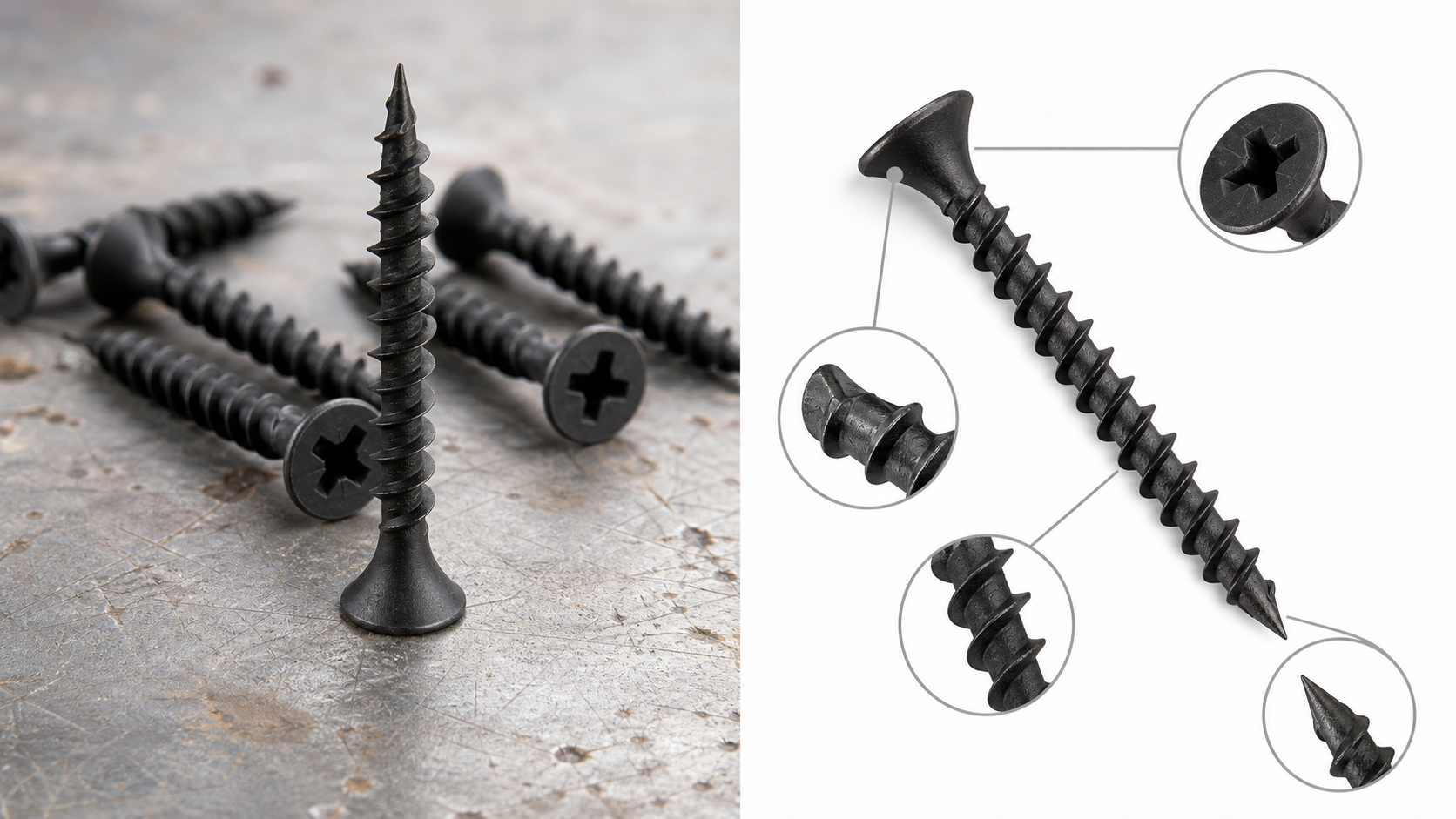
Before diving into selection criteria, it is essential to understand the basic components of a drywall screw. Most drywall screws are manufactured from Q195 or Q235 steel wire, though custom materials can be specified for specialized applications. The screw consists of a bugle head, a Phillips drive recess, a threaded shank, and a needle-point tip. The bugle head is designed to countersink slightly below the paper surface of gypsum board without tearing it, while the Phillips drive provides consistent torque transfer during installation.
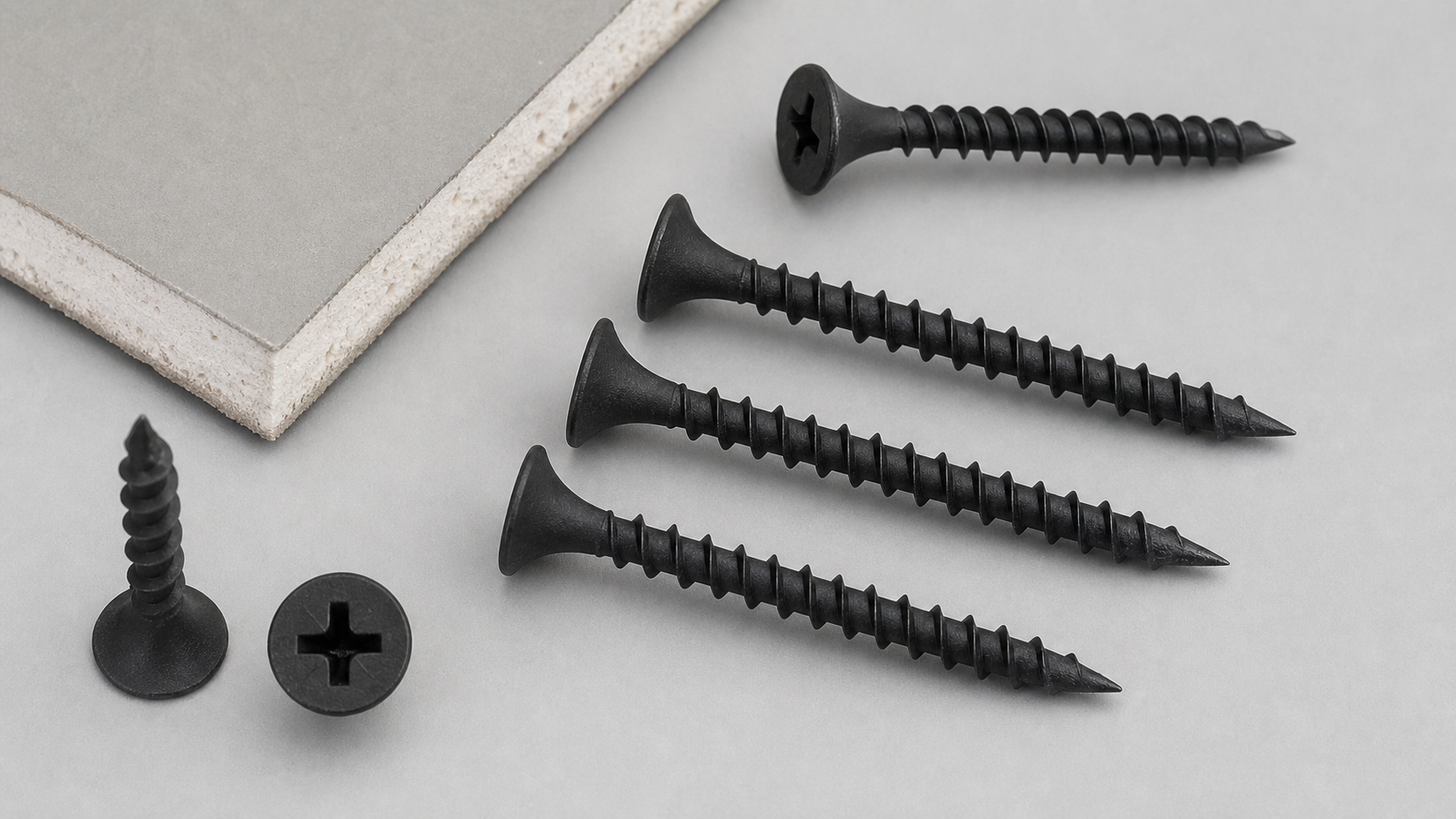
The thread pattern is a critical feature. Drywall screws typically feature deep, sharp coarse threads that provide strong holding power in gypsum board and wood framing. The needle-point tip allows for quick penetration without pre-drilling. Surface treatments such as black phosphate or galvanized zinc coatings are applied to resist corrosion and reduce friction during driving. Each of these elements must be matched to the specific substrate and environmental conditions of the project.
Key Factors in Selecting Drywall Screws for Commercial Projects
1. Substrate Type and Thread Selection
The substrate into which the screw will be driven is the primary determinant of thread type. For wood framing (typically 2×4 or 2×6 studs), coarse-thread screws are recommended. The deep, sharp threads bite into the wood fibers, providing strong pull-out resistance. For light-gauge steel studs (typically 20 to 25 gauge), fine-thread screws are required. Fine threads engage the thin metal more effectively without stripping. Using coarse-thread screws in steel studs can result in poor holding power and increased installation difficulty.
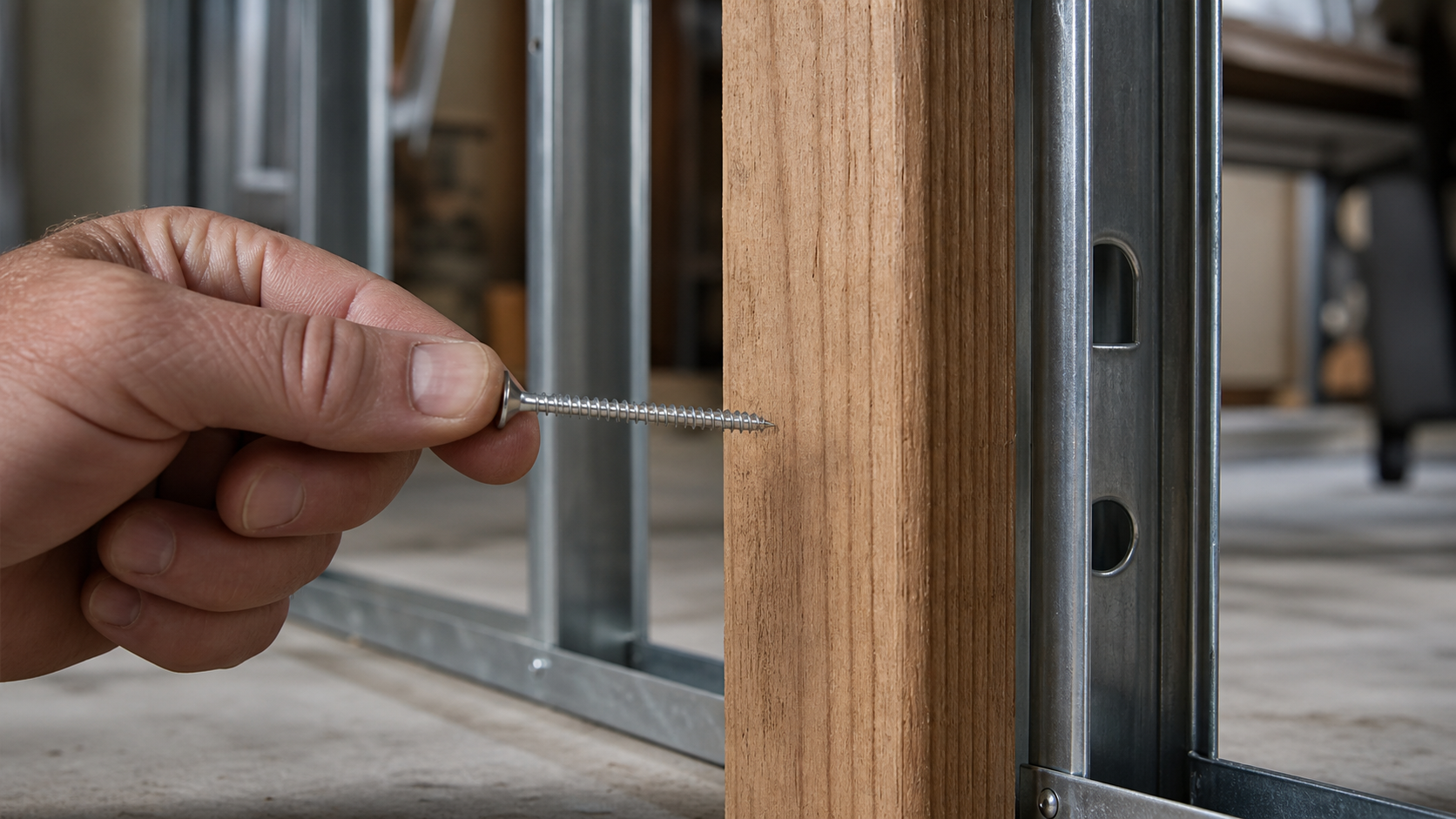
For projects involving both wood and steel framing, contractors should maintain separate inventories of coarse-thread and fine-thread screws. Some manufacturers offer dual-purpose screws with specialized thread patterns, but these should be tested on a small sample of the actual substrate before full-scale use.
2. Screw Length and Gauge
Screw length is determined by the thickness of the materials being fastened. For single-layer gypsum board (typically 1/2-inch or 5/8-inch thickness) attached to wood or steel studs, a 1-1/4-inch screw is standard. For double-layer applications (such as sound-rated assemblies), 1-5/8-inch or longer screws are necessary to penetrate both layers and achieve adequate embedment into the framing. The general rule is that the screw should penetrate the stud by at least 3/8 inch for wood and 1/4 inch for steel.
Diameter is typically standardized for drywall screws, but custom diameters can be specified for specialized applications. Standard diameters range from #6 to #8, with #6 being common for residential and light commercial work, and #8 for heavier commercial assemblies. Contractors should verify that the screw diameter matches the screw gun collation and driver bit size.
3. Coating and Corrosion Resistance
The surface treatment of drywall screws affects both corrosion resistance and driving performance. Common coatings include:
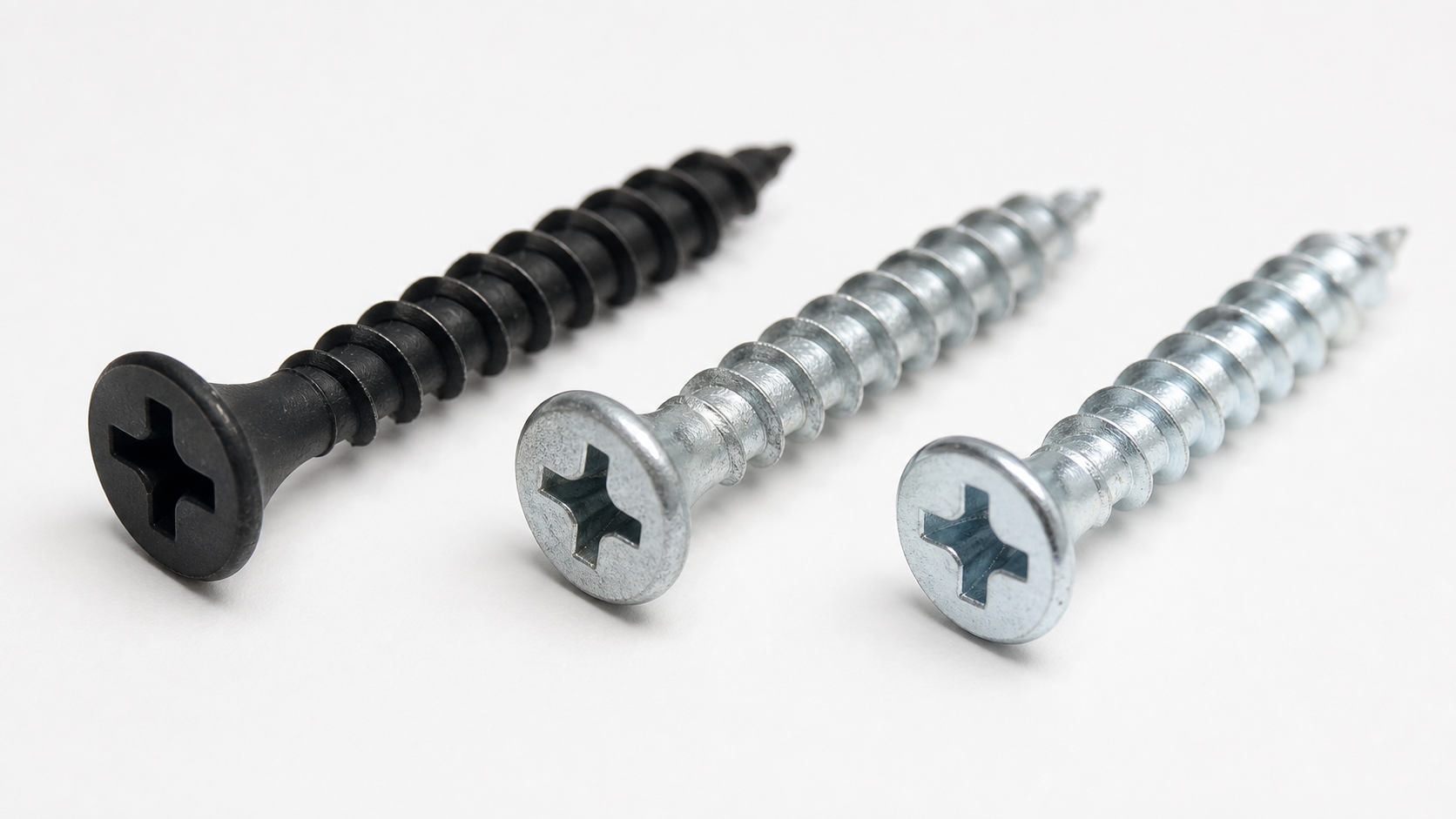
- Black phosphate: Provides a matte black finish and moderate corrosion resistance. Suitable for interior applications where humidity is controlled. The phosphate coating also reduces friction during driving.
- Galvanized zinc: Offers improved corrosion resistance compared to black phosphate. Silver galvanized zinc is common for areas with occasional moisture exposure, such as bathrooms or basements.
- Bright electro-zinc plated: Provides a shiny silver appearance and good corrosion resistance. Often used in commercial interiors where appearance matters.
- Stainless steel: For extreme environments such as exterior soffits, pool areas, or coastal construction. Stainless steel screws are corrosion-proof but significantly more expensive. Note that stainless steel is not a coating but a base material; verify with the manufacturer if stainless steel is required.
For most commercial interior projects, black phosphate or galvanized screws are sufficient. For areas subject to high humidity or potential water exposure, specify galvanized or electro-zinc plated screws. Always consult the project specifications and local building codes for corrosion resistance requirements.
4. Fire-Rated Assemblies and Code Compliance
In commercial construction, fire-rated assemblies are common. These assemblies require specific screw types, lengths, and spacing to maintain the fire-resistance rating. For example, a one-hour fire-rated wall may require 5/8-inch Type X gypsum board attached with 1-5/8-inch screws spaced at 8 inches on center. Contractors must follow the assembly manufacturer’s published details or the UL listing for the specific assembly. Using the wrong screw can void the fire rating and lead to failed inspections.
Always verify that the selected screw meets the requirements of the applicable building code (IBC, IRC, or local amendments). While we cannot certify specific products, contractors should request documentation from the screw manufacturer regarding compliance with ASTM C1002 (standard specification for steel self-piercing tapping screws for gypsum board applications).
Contractor Selection Guidance: A Step-by-Step Approach
To ensure you select the correct drywall screw for your commercial project, follow this systematic process:
- Identify the substrate: Determine whether the framing is wood, light-gauge steel, or a combination. This dictates thread type.
- Determine gypsum board thickness and layers: Measure the total thickness of gypsum board to be fastened. Add 3/8 inch for wood studs or 1/4 inch for steel studs to determine minimum screw length.
- Assess environmental conditions: Is the area interior, exterior, or subject to moisture? This determines coating requirements.
- Check fire-rating requirements: Review the project specifications for any fire-rated assemblies. Follow the published assembly details exactly.
- Verify code compliance: Ensure the screw meets ASTM C1002 or other applicable standards. Request documentation from the supplier.
- Test on a sample: Before full-scale installation, drive a few screws into the actual substrate to verify performance. Check for proper countersinking, no stripping, and adequate holding power.
- Order from a reputable supplier: Specify the exact screw type, length, coating, and quantity. Request packaging that suits your job site (carton, bag, pallet, or custom export packing).
Comparison Table: Drywall Screw Selection by Substrate and Condition
| Substrate / Condition | Thread Type | Recommended Length (for 1/2″ board) | Recommended Coating | Notes |
|---|---|---|---|---|
| Wood studs (interior, dry) | Coarse thread | 1-1/4″ | Black phosphate | Standard for most interior wood-framed walls |
| Wood studs (interior, high humidity) | Coarse thread | 1-1/4″ | Galvanized or electro-zinc | For bathrooms, kitchens, basements |
| Light-gauge steel studs (interior, dry) | Fine thread | 1-1/4″ | Black phosphate | Fine threads engage thin metal better |
| Light-gauge steel studs (high humidity) | Fine thread | 1-1/4″ | Galvanized or electro-zinc | Corrosion resistance is critical |
| Double-layer gypsum (wood studs) | Coarse thread | 1-5/8″ or longer | Black phosphate | Ensure penetration of both layers plus 3/8″ into stud |
| Double-layer gypsum (steel studs) | Fine thread | 1-5/8″ or longer | Black phosphate | Ensure penetration of both layers plus 1/4″ into stud |
| Exterior soffits or coastal areas | Coarse or fine (per substrate) | Per substrate | Stainless steel | Verify stainless steel material with manufacturer |
| Fire-rated assembly (per UL listing) | As specified in assembly | As specified in assembly | As specified in assembly | Follow published details exactly; do not substitute |
Limitations and Common Pitfalls
Even experienced contractors can make mistakes when selecting drywall screws. Here are common pitfalls to avoid:
- Using coarse-thread screws in steel studs: This is the most common error. Coarse threads strip out of thin steel, resulting in loose boards and popped heads.
- Using fine-thread screws in wood studs: Fine threads do not grip wood fibers effectively, leading to poor holding power.
- Ignoring fire-rating requirements: Substituting screws in a fire-rated assembly can void the rating and cause inspection failures.
- Overlooking corrosion resistance: Using black phosphate screws in a high-humidity area can lead to rust staining and fastener failure.
- Assuming all screws are the same: Different manufacturers may have slight variations in thread geometry, hardness, and coating quality. Stick with reputable brands and verify specifications.
- Not testing before full installation: Always test a few screws on the actual substrate to ensure proper performance.
Frequently Asked Questions (FAQs)
Q: Can I use drywall screws for exterior applications?
A: Standard drywall screws are not designed for exterior use unless specifically rated for such conditions. For exterior applications, use stainless steel screws or those with a corrosion-resistant coating specifically approved for exterior exposure. Always consult the manufacturer’s recommendations.
Q: What is the difference between coarse-thread and fine-thread drywall screws?
A: Coarse-thread screws have deeper, sharper threads designed for wood framing. Fine-thread screws have shallower, more closely spaced threads designed for light-gauge steel studs. Using the wrong thread type can result in poor holding power and installation difficulties.
Q: How do I determine the correct screw length for a double-layer gypsum board assembly?
A: Measure the total thickness of both layers of gypsum board (e.g., 1/2″ + 1/2″ = 1″). Add the required penetration into the stud (3/8″ for wood, 1/4″ for steel). For wood studs with two layers of 1/2″ board, use a 1-5/8″ screw. For steel studs, a 1-1/2″ screw may suffice, but always verify with the assembly manufacturer.
Q: Are all drywall screws interchangeable between manufacturers?
A: No. While many screws conform to ASTM C1002, there can be variations in thread geometry, hardness, coating quality, and head design. It is best to stick with a single reputable manufacturer for consistency across a project. If switching brands, test on a sample substrate first.
Q: What does “bugle head” mean?
A: A bugle head is a countersunk head shape that flares outward slightly, allowing the screw to sit flush with or slightly below the surface of the gypsum board without tearing the paper facing. This design is standard for drywall screws.
Q: Can I use drywall screws for attaching gypsum board to concrete or masonry?
A: No. Drywall screws are not designed for concrete or masonry. For these substrates, use concrete screws (such as Tapcon) or powder-actuated fasteners. Drywall screws will not penetrate or hold in masonry.
Conclusion
Selecting the correct drywall screw for a commercial project requires careful consideration of substrate type, screw length, coating, and project-specific requirements such as fire ratings and environmental conditions. By following the guidance in this article, contractors can reduce the risk of fastener failures, avoid costly callbacks, and ensure code compliance. Remember to always test screws on the actual substrate before full-scale installation and to request documentation from suppliers regarding material specifications and standards compliance.
For contractors seeking reliable drywall screws for their commercial projects, we offer customized solutions including Q195/Q235 steel wire or custom materials, a range of surface treatments (black phosphate, galvanized, or customized), and flexible packaging options (carton, bag, pallet, or customized export packing). Contact us today to discuss your project requirements and receive a quotation tailored to your specific needs.
Request a Quotation: Fill out our online form or call our sales team to discuss your drywall screw specifications. We provide competitive pricing for bulk orders and can accommodate custom lengths, diameters, and coatings. Let us help you select the right fastener for your next commercial project.