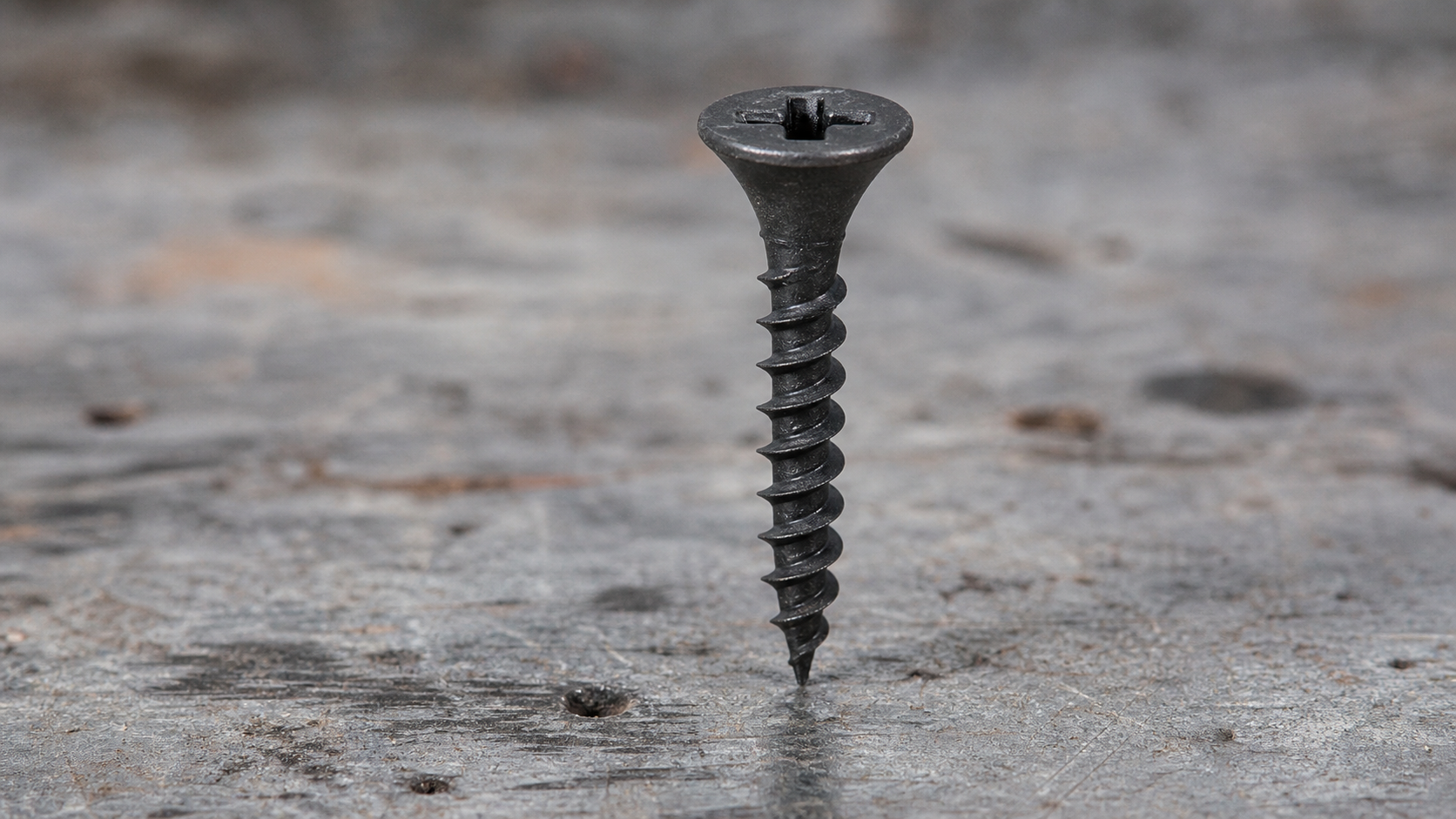
Selecting the right drywall screw for a commercial project is not a one-size-fits-all decision. Importers and contractors must match fastener specifications to the specific board material, framing substrate, and environmental conditions. This guide provides a clear decision framework based on verified product characteristics, helping you avoid common specification errors and ensure reliable installation.
Understanding the Core Specifications
Every drywall screw is defined by five key attributes: head, drive, thread, tip, and surface treatment. Each attribute affects how the screw performs during installation and over the life of the assembly.
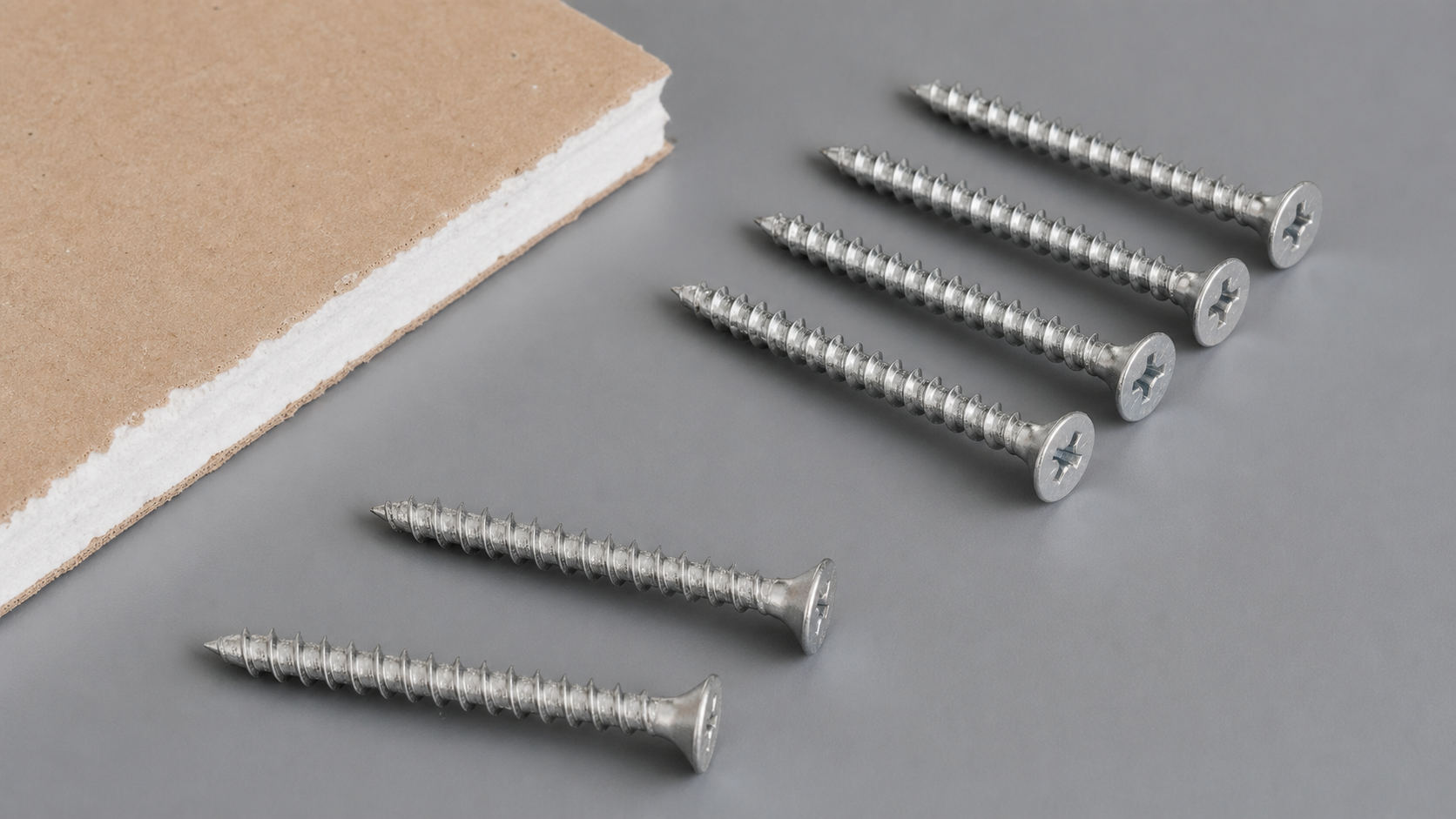
Head: Bugle Head
All standard drywall screws feature a bugle head. This countersunk shape compresses the gypsum board surface without tearing the paper facing, creating a smooth dimple for joint compound. The bugle head is designed to distribute clamping force evenly, reducing the risk of board damage. For B2B projects, this consistency is critical—it minimizes rework and ensures a uniform finish across large surface areas.
Drive: Phillips Drive Recess
Phillips drive recess is the industry standard for drywall screws. It provides reliable bit engagement and cam-out characteristics that help prevent over-driving. While other drive types exist, Phillips remains the most widely adopted for manual and auto-feed screwdrivers in commercial applications. When sourcing for a crew of dozens, standardizing on Phillips reduces tool inventory and training time.
Thread: Deep Sharp Coarse Thread
The thread design determines how the screw engages with the framing material. Deep sharp coarse threads are optimized for wood framing—they cut into the wood fibers quickly and hold firmly. For metal studs, fine threads are typically required, but the verified facts for this product specify coarse thread as the standard offering. Always confirm thread type with your supplier when framing material varies. A mismatch here can lead to stripped holes or insufficient holding power, both costly in the field.
Tip: Needle-Point Tip
A needle-point tip allows the screw to penetrate the gypsum board without pre-drilling. The sharp point reduces the force needed to start the screw and minimizes board face damage. This tip design is essential for efficient installation in both wood and light-gauge metal framing. In high-volume projects, even a fraction of a second saved per screw adds up to significant labor savings.
Surface Treatment: Black Phosphate, Galvanized, or Customized
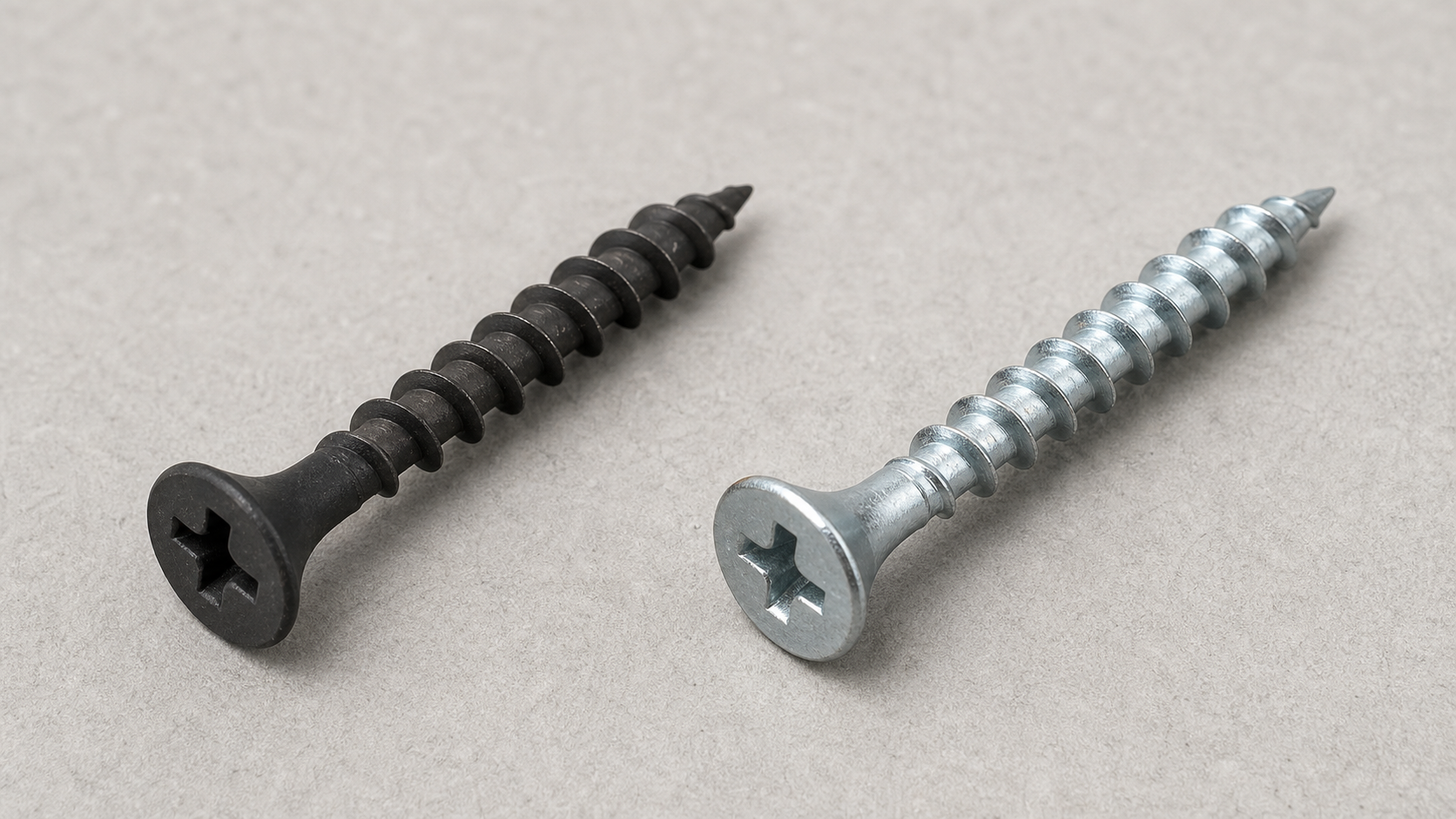
Surface treatment directly impacts corrosion resistance and drive performance. Black phosphate provides a matte finish that offers moderate corrosion protection and excellent lubricity for driving. Galvanized coatings (silver or bright zinc) provide higher corrosion resistance for humid environments. Customized treatments are available for specialized requirements. For coastal or high-humidity regions, galvanized is often the safer choice despite a slightly higher per-unit cost.
Matching Screws to Board and Framing Materials
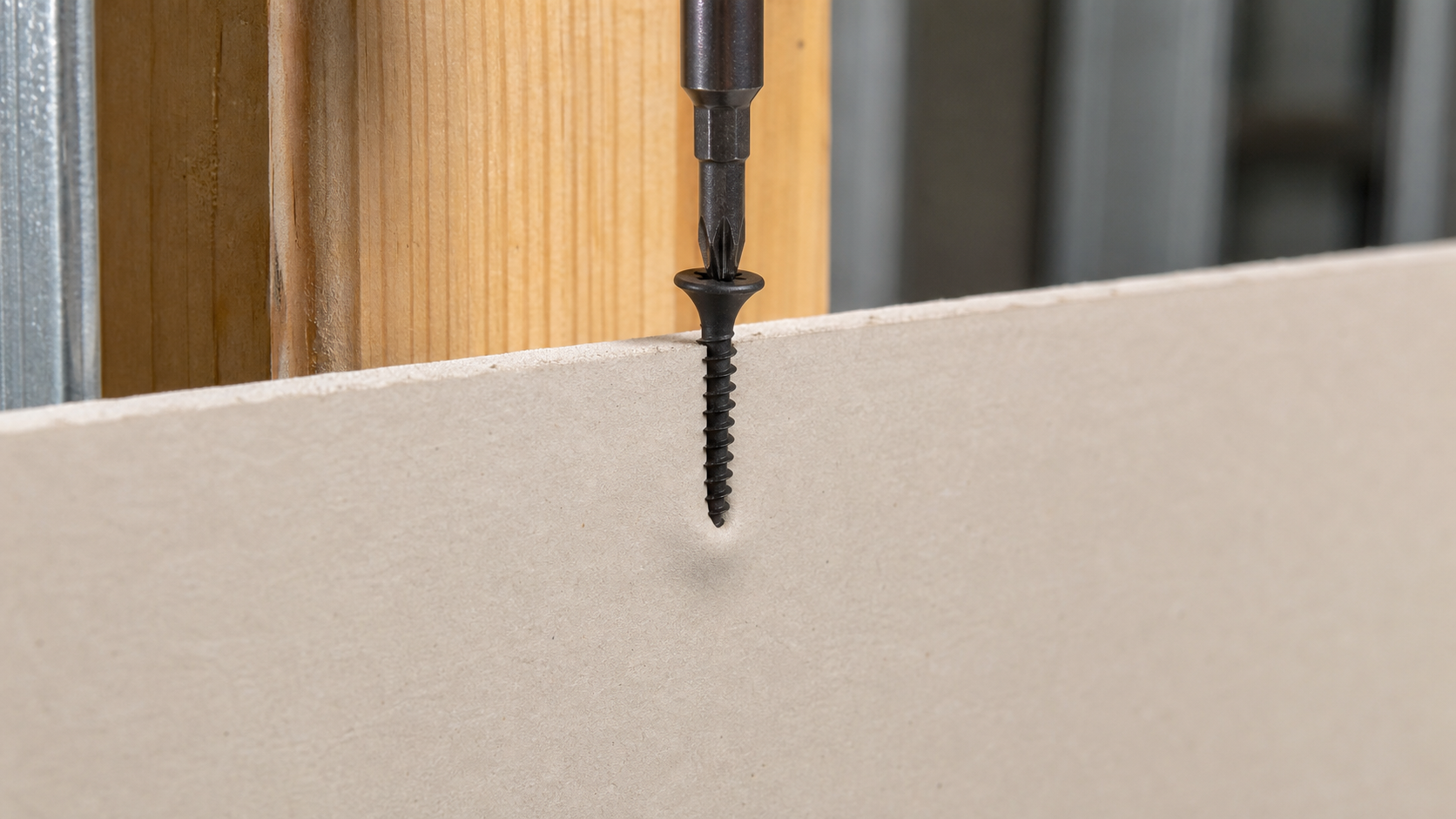
The following decision matrix helps you select the appropriate screw specification based on common board and framing combinations.
| Board Type | Framing Material | Recommended Thread | Recommended Tip | Recommended Surface Treatment |
|---|---|---|---|---|
| Standard gypsum board | Wood studs | Coarse thread | Needle-point | Black phosphate |
| Standard gypsum board | Light-gauge steel studs | Fine thread (verify with supplier) | Needle-point or self-drilling | Galvanized |
| Moisture-resistant gypsum board | Wood studs | Coarse thread | Needle-point | Galvanized |
| Fire-rated gypsum board | Wood or steel studs | As per framing | Needle-point | Black phosphate or galvanized |
Note: The verified facts for this product confirm coarse thread as standard. For steel studs, fine thread or self-drilling variants may be required—always confirm with your supplier.
Practical Selection Limits
When specifying drywall screws, keep these practical limits in mind:
- Length: The screw should penetrate the framing material by at least 5/8 inch (16 mm). For 1/2-inch gypsum board on wood studs, a 1-1/4 inch screw is typical. For double-layer applications, increase length accordingly.
- Diameter: Standard diameters range from #6 to #8. #6 is common for light-duty applications; #8 provides higher pull-out resistance.
- Packing: Commercial projects often require bulk packing (cartons or pallets) rather than retail boxes. Confirm packing options with your supplier.
Contractor Selection Guidance
Choosing the right drywall screw supplier is as important as choosing the screw itself. For B2B projects, consider these factors when evaluating suppliers:
- Material Consistency: Verify that the supplier uses Q195 or Q235 steel wire as standard. Inconsistent material can lead to brittle screws that snap during driving.
- Customization Capability: Look for suppliers who can customize length, diameter, and surface treatment to match your project specs. Avoid those who only offer fixed stock sizes.
- Packing Flexibility: Bulk packing reduces per-unit cost. Ensure the supplier offers carton, bag, pallet, or customized export packing options.
- Lead Time: For large projects, confirm lead times and minimum order quantities. A supplier who can deliver in 4-6 weeks is preferable to one requiring 12 weeks.
- Communication: The supplier should be able to confirm thread type for steel studs and provide samples before full production. Lack of responsiveness is a red flag.
- Quality Assurance: Ask about quality control processes, such as batch testing for hardness and tensile strength. A reputable supplier will provide documentation upon request.
- Sample Policy: Request samples before committing to a large order. This allows you to test drive performance with your specific tools and board materials.
Comparison Table: Common Drywall Screw Options
| Specification | Standard Option | Alternative Option | Best Use Case |
|---|---|---|---|
| Head | Bugle head | Flat head (rare) | All gypsum board installations |
| Drive | Phillips | Square or Torx | Standard commercial tools |
| Thread | Coarse thread | Fine thread | Wood framing (coarse); steel studs (fine) |
| Tip | Needle-point | Self-drilling | Standard board; steel studs (self-drilling) |
| Surface Treatment | Black phosphate | Galvanized | Dry interior (black phosphate); humid areas (galvanized) |
Limitations to Consider
While drywall screws are versatile, they have limitations that B2B buyers should acknowledge:
- Not for Exterior Use: Standard drywall screws are intended for interior applications. For exterior or wet areas, stainless steel or specialized coated screws are required—these are not part of the standard offering unless separately confirmed.
- No Certifications: The verified facts for this product do not include certifications such as ASTM or ICC-ES. If your project requires code compliance, request documentation from the supplier.
- No Fixed Stock Dimensions: Length and diameter are customized per order. This means you cannot rely on off-the-shelf availability; plan your procurement timeline accordingly.
- Not for Load-Bearing: Drywall screws are designed for attaching gypsum board to framing, not for structural loads. Use specialized fasteners for hanging heavy fixtures.
- Limited Corrosion Resistance: Black phosphate offers only moderate protection. In coastal or high-humidity environments, galvanized or stainless steel options are necessary.
Specification Checklist for Importers
Use this checklist when ordering drywall screws to ensure all critical parameters are covered:
- ☐ Material: Q195/Q235 steel wire or customized material
- ☐ Length: Customized according to project requirements
- ☐ Diameter: Customized according to project requirements
- ☐ Head: Bugle head
- ☐ Drive: Phillips drive recess
- ☐ Thread: Deep sharp coarse thread (confirm if fine thread needed)
- ☐ Tip: Needle-point tip
- ☐ Surface Treatment: Black phosphate / galvanized / customized
- ☐ Packing: Carton / bag / pallet / customized export packing
- ☐ Framing Material: Wood or steel? (affects thread choice)
- ☐ Environmental Conditions: Dry interior or humid? (affects coating choice)
Frequently Asked Questions
Can drywall screws be used for metal studs?
Standard coarse-thread drywall screws are designed for wood framing. For metal studs, fine-thread screws or self-drilling screws are typically required to achieve proper engagement. Always verify the thread type with your supplier when using steel framing.
What is the difference between black phosphate and galvanized drywall screws?
Black phosphate provides moderate corrosion resistance and a matte finish that reduces glare. It also offers lubricity for easier driving. Galvanized coatings (silver or bright zinc) offer higher corrosion resistance, making them suitable for humid environments or areas with occasional moisture exposure.
How do I determine the correct screw length for my project?
The screw should penetrate the framing material by at least 5/8 inch (16 mm). For 1/2-inch gypsum board on wood studs, use 1-1/4 inch screws. For 5/8-inch board, use 1-5/8 inch screws. For double-layer applications, add the thickness of both layers and ensure adequate penetration.
Can I use drywall screws for exterior applications?
Standard drywall screws are intended for interior use. For exterior applications, screws with higher corrosion resistance (e.g., stainless steel or specialized coatings) are required. The verified facts for this product do not include stainless steel material unless separately confirmed with the supplier.
What packing options are available for commercial orders?
Packing can be customized to your needs, including cartons, bags, pallets, or other export packing. Bulk packing is common for commercial projects to reduce per-unit cost and handling. Confirm packing details with your supplier.
What is the typical lead time for bulk drywall screw orders?
Lead times vary by supplier and order volume. For standard specifications, 4-6 weeks is common. Custom orders may require 8-12 weeks. Always confirm lead time and minimum order quantity before placing an order.
Can I get samples before placing a bulk order?
Most suppliers offer samples for evaluation. Request samples that match your intended specifications—length, diameter, thread type, and coating. Test them with your tools and board materials to ensure compatibility before committing to a large order.
For more information on drywall fasteners, see our guide on drywall nails. To discuss your specific project requirements, contact our team.
Ready to order? Get a quote for your project today. Request a Quote