When specifying fasteners for gypsum board installations, the details of the drywall screw matter more than many buyers realize. The wrong head profile can cause paper tearing; an incorrect thread can strip in the framing; a poor tip can make driving difficult. This guide walks through the key specification points for drywall screws used in gypsum board applications, helping you match fastener design to your board type, framing material, and installation conditions. For B2B buyers, understanding these nuances reduces waste, speeds installation, and ensures code-compliant results.
Understanding Drywall Screw Anatomy for Gypsum Board
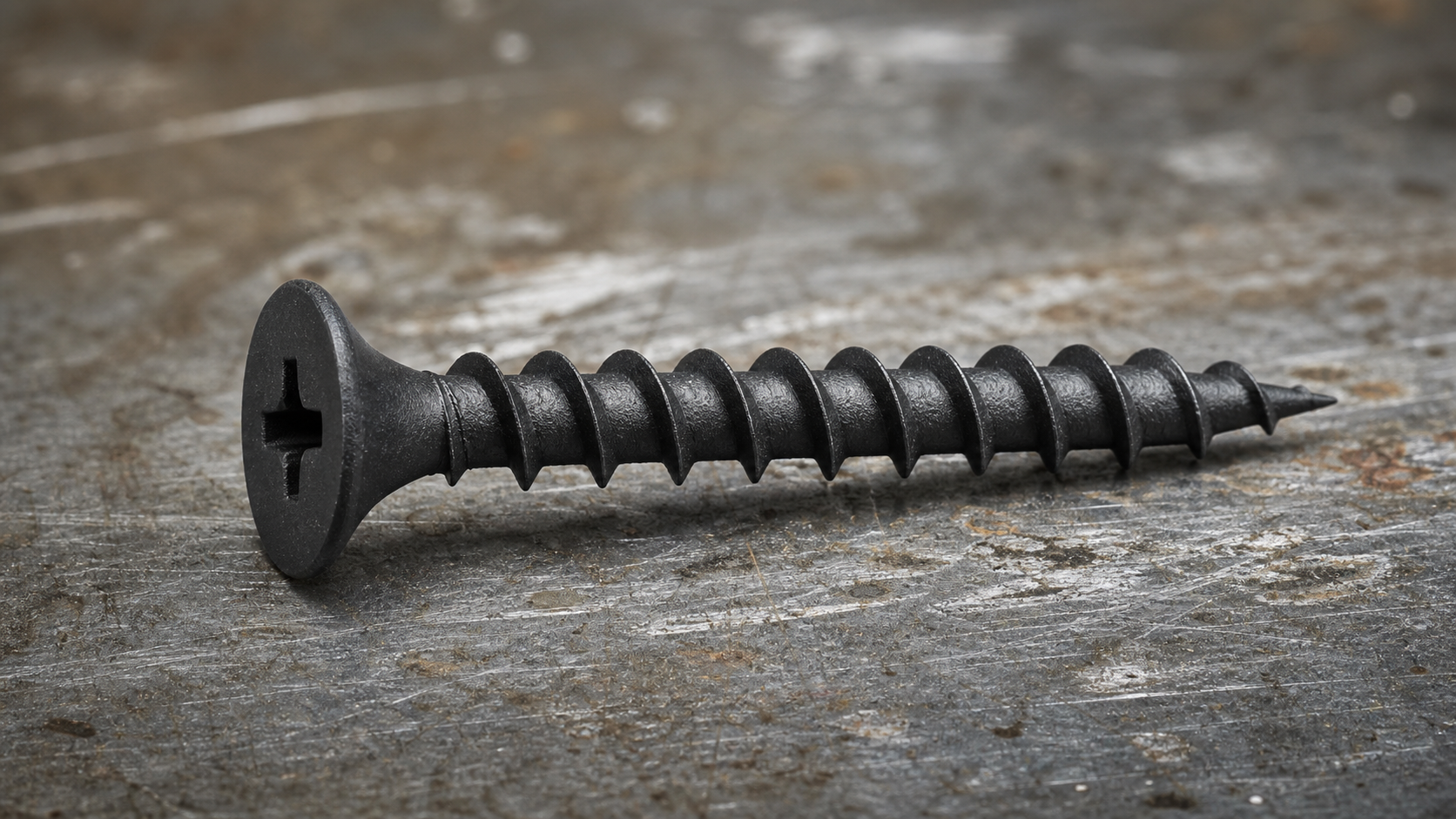
A drywall screw is not a generic self-tapping screw. It is engineered specifically for attaching gypsum board to wood or metal framing. The critical features include the head, drive, thread, and tip. Each feature serves a purpose in ensuring a secure, flush attachment without damaging the board surface. The material is typically Q195 or Q235 steel wire, though customized materials are available for specialized orders.
Bugle Head: Why It Matters for Gypsum Board
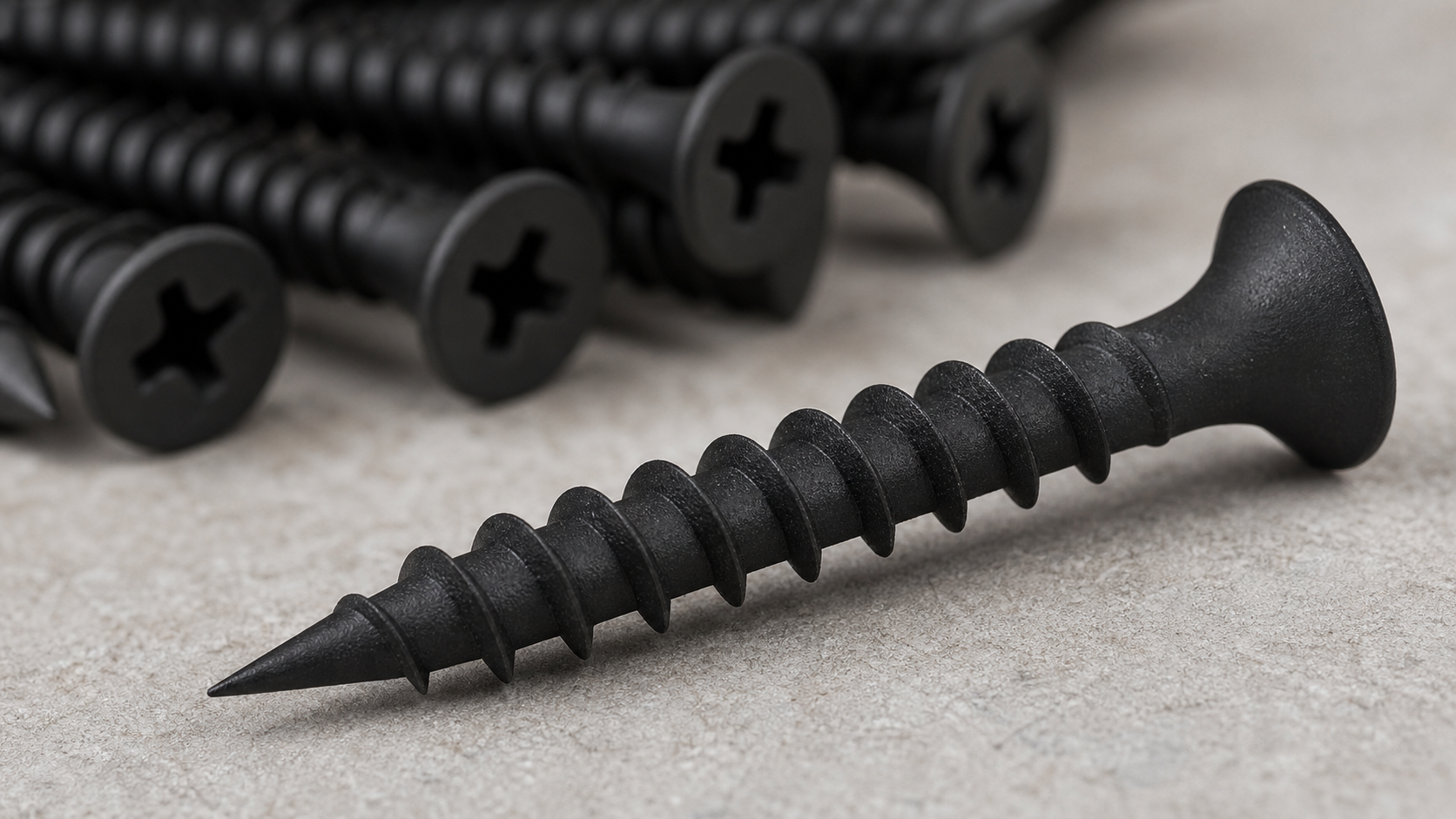
The standard head for drywall screws is the bugle head. This shape is designed to countersink slightly into the gypsum board without tearing the paper facing. The underside of the head has a gradual curve that compresses the board fibers rather than cutting them. When specifying, ensure the head diameter is appropriate for the board thickness—typically 1-1/4 inches for 1/2-inch board and 1-5/8 inches for 5/8-inch board. The bugle head also provides a larger bearing surface to hold the board firmly against the framing. For double-layer applications, the head must still seat cleanly without over-driving.
Phillips Drive: The Industry Standard
Almost all drywall screws use a Phillips drive recess. This cross-shaped recess allows for high torque transfer from the driver bit without cam-out (slipping). For commercial projects, consider specifying a #2 Phillips drive, which is the most common size for drywall screws. Some screws offer a square drive or Torx drive for even less cam-out, but Phillips remains the standard for gypsum board applications due to widespread tool compatibility. If your crew uses impact drivers, verify that the bit fits snugly to avoid stripping the recess.
Deep Sharp Coarse Thread: For Wood Framing
The thread on a drywall screw is typically a deep, sharp, coarse thread. This design is optimized for wood framing. The coarse thread provides strong holding power in softwoods like pine or fir, and the sharp edges cut into the wood fibers rather than displacing them, reducing the risk of splitting. For metal framing, a fine thread (often called self-drilling or S-type) is used, but for gypsum board on wood studs, coarse thread is the standard. The thread depth and pitch are engineered to engage quickly and resist pull-out under normal loads.
Needle-Point Tip: Easy Start
The needle-point tip is a sharp, pointed end that allows the screw to penetrate the gypsum board and framing quickly without pre-drilling. This tip design reduces the force required to start the screw and minimizes the risk of damaging the board surface. For metal framing, a self-drilling tip (like a #2 drill point) is required, but for wood framing, the needle-point is sufficient. Ensure the tip is free of burrs, as a damaged tip can cause wandering or surface cracking.
Surface Treatment Options and Their Impact
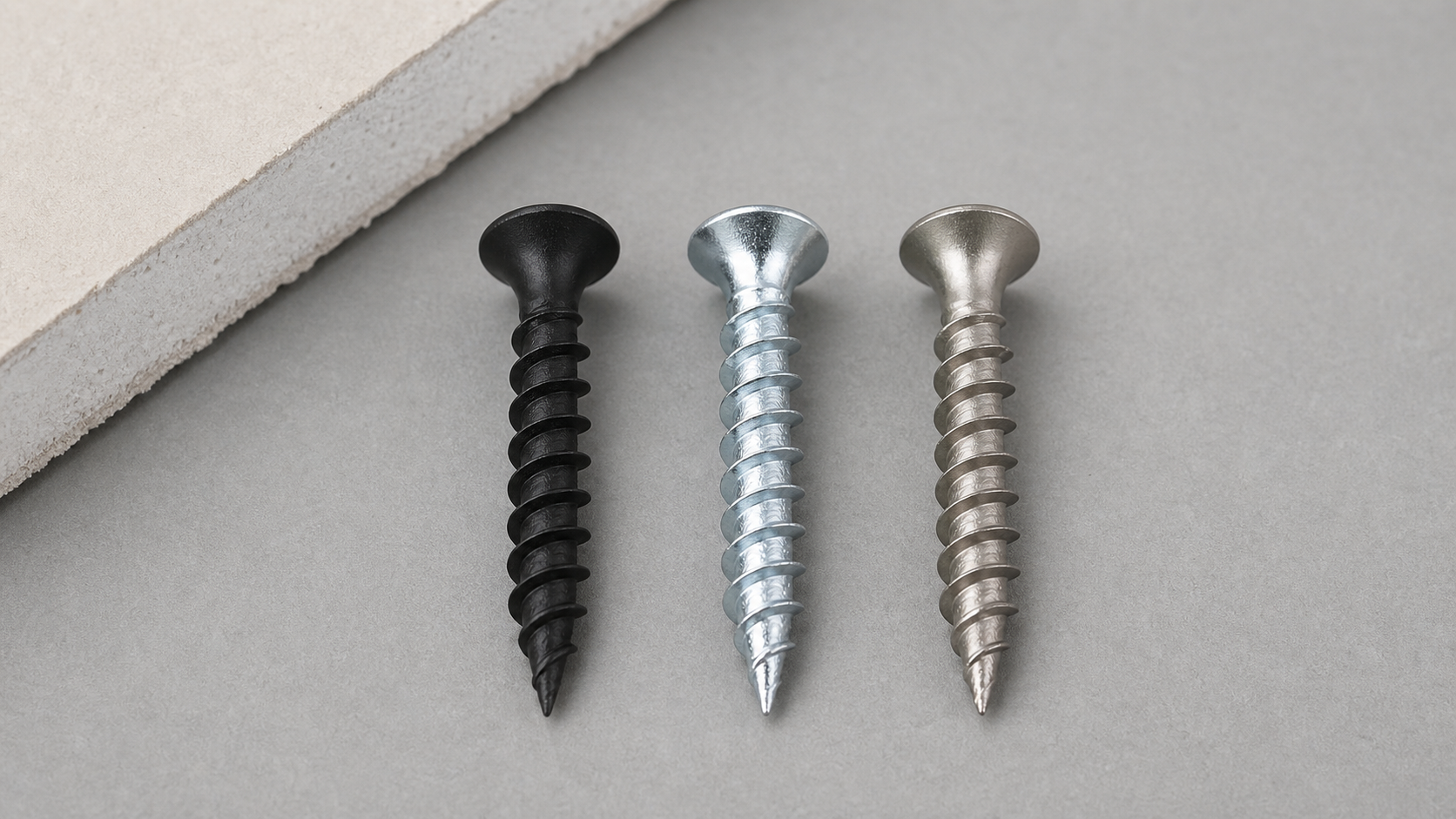
Drywall screws are available with several surface treatments, each offering different levels of corrosion resistance and drive performance. The choice depends on the environment and the desired appearance. Visual finishes include matte black phosphate, silver galvanized zinc, bright electro-zinc plated, and natural stainless-steel appearance (if separately verified).
Black Phosphate
Black phosphate is the most common finish for drywall screws. It provides a matte black appearance and offers moderate corrosion resistance. The phosphate coating also acts as a lubricant during driving, reducing friction and making installation easier. This finish is suitable for interior applications where moisture is not a concern. It is cost-effective and widely available in bulk packing.
Galvanized (Zinc Plating)
Galvanized screws have a silver or bright appearance and offer better corrosion resistance than black phosphate. They are often used in areas with higher humidity, such as bathrooms or basements. However, the zinc coating can increase friction during driving, so some screws have a wax or lubricant coating to compensate. For commercial bathrooms or kitchens, galvanized screws are a common choice.
Customized Finishes
For specialized applications, other finishes such as electro-zinc plating or even stainless steel (if separately verified) may be specified. Always confirm the finish requirements with your project specifications and environmental conditions. Custom finishes can be ordered in bulk, but lead times may vary.
Specification Checklist for Gypsum Board Screws
When ordering drywall screws for gypsum board applications, use the following checklist to ensure you cover all critical parameters:
- Head type: Bugle head (standard for gypsum board)
- Drive recess: Phillips #2 (or specify alternative if needed)
- Thread type: Coarse thread for wood framing; fine thread for metal framing
- Tip style: Needle-point for wood; self-drilling for metal
- Length: Typically 1-1/4″ for 1/2″ board on 2×4 studs; 1-5/8″ for 5/8″ board or double layer
- Diameter: #6 (0.138″) or #8 (0.164″) are common; #8 offers higher shear strength
- Surface treatment: Black phosphate for dry interior; galvanized for moisture-prone areas
- Packing: Carton, bag, or pallet; specify quantity per unit
Comparison Table: Drywall Screw Options for Gypsum Board
| Feature | Coarse Thread (Wood Framing) | Fine Thread (Metal Framing) | Self-Drilling Tip (Metal) |
|---|---|---|---|
| Best for | Wood studs, joists | Steel studs, tracks | Steel studs (thick gauge) |
| Thread depth | Deep, sharp | Shallow, numerous | Shallow with drill point |
| Holding power | High in softwood | Moderate in steel | Moderate in steel |
| Tip style | Needle-point | Needle-point or self-drilling | Self-drilling (#2 point) |
| Common length | 1-1/4″ to 2″ | 1″ to 1-5/8″ | 1″ to 1-5/8″ |
| Surface treatment | Black phosphate or galvanized | Black phosphate or galvanized | Galvanized or custom |
| Typical application | Residential, light commercial | Commercial steel studs | Heavy-gauge steel framing |
Application Considerations
Beyond the screw itself, the installation method affects performance. Screws should be driven perpendicular to the board surface, and the head should be slightly countersunk (dimpled) without breaking the paper. Over-driving can cause the head to tear through the paper, reducing holding power. For commercial projects, consider using a drywall screw gun with depth adjustment to ensure consistent results.
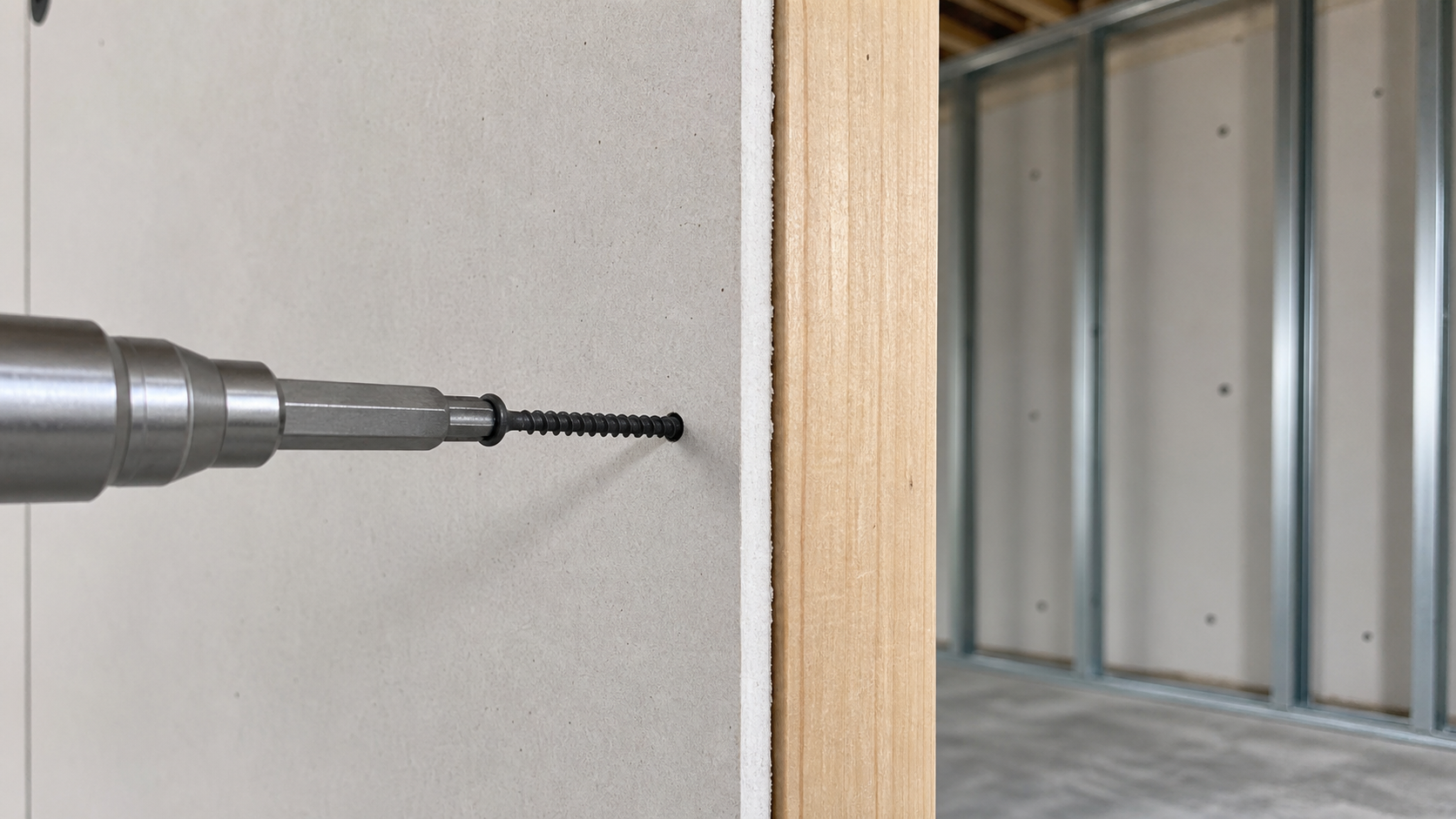
For double-layer gypsum board (e.g., for soundproofing or fire rating), use longer screws (1-5/8″ or 2″) to penetrate both layers and the framing. The thread should still be coarse for wood framing, but ensure the screw length is sufficient to embed at least 3/4″ into the stud. For metal framing, use fine-thread screws with self-drilling tips if the steel gauge exceeds 20.
Common Mistakes in Specification
One frequent error is using fine-thread screws for wood framing. Fine threads are designed for metal studs and do not hold as well in wood. Another mistake is selecting screws that are too short, leading to inadequate embedment. Always verify the required embedment depth per building code (typically 3/4″ minimum for wood framing).
Also, avoid mixing screw types within a project. Inconsistent head profiles or drive types can slow installation and lead to quality issues. Standardize on one specification for the entire job. Additionally, do not assume that all black phosphate screws are identical—verify the coating thickness and lubricant presence with your supplier.
Contractor Selection Guidance for B2B Buyers
Choosing the right contractor for gypsum board installation is as important as selecting the correct screw. For B2B buyers, consider the following criteria when vetting contractors:
- Experience with your board type: Ensure the contractor has worked with the specific gypsum board thickness and type (e.g., standard, fire-resistant, moisture-resistant).
- Tooling and equipment: Verify they use drywall screw guns with depth adjustment to prevent over-driving or under-driving.
- Knowledge of fastener specifications: Ask if they can identify the correct screw thread, tip, and length for your framing material.
- References and past projects: Request examples of similar commercial or residential projects they have completed.
- Warranty and insurance: Confirm they carry liability insurance and offer a workmanship warranty.
- Bulk ordering capability: For large projects, ensure they can handle bulk material orders and coordinate with your fastener supplier.
By vetting contractors on these points, you reduce the risk of installation errors that can compromise board integrity and project timelines.
Limitations of Drywall Screws for Gypsum Board
While drywall screws are the standard fastener for gypsum board, they have limitations that B2B buyers should understand:
- Not for structural loads: Drywall screws are designed for shear loads from board weight, not for tension or structural framing connections. Use structural screws or nails for load-bearing applications.
- Corrosion limits: Standard black phosphate and galvanized finishes are not suitable for exterior exposure or continuous high humidity. For such environments, specify stainless steel (if verified) or hot-dip galvanized screws.
- Not for metal framing without proper tip: Using needle-point screws on steel studs can cause bending or breakage. Always use self-drilling tips for metal framing.
- Length constraints: Screws longer than 2″ may be difficult to drive without pre-drilling, especially in dense wood or thick steel.
- No fire rating guarantee: While screws are used in fire-rated assemblies, the fire rating depends on the entire system (board, framing, joints), not the fastener alone. Verify with the assembly manufacturer.
Frequently Asked Questions
1. Can I use drywall screws for exterior gypsum board?
Standard drywall screws with black phosphate or galvanized finish are not recommended for exterior use. For exterior gypsum board (e.g., soffits or sheathing), use screws with a corrosion-resistant coating such as hot-dip galvanized or stainless steel (if verified). Always check the manufacturer’s recommendations for exterior applications.
2. What is the difference between coarse thread and fine thread drywall screws?
Coarse thread screws have deeper, sharper threads designed for wood framing. They provide better holding power in wood. Fine thread screws have shallower, more numerous threads and are designed for metal framing (steel studs). Using the wrong thread type can result in poor holding or stripped holes.
3. How do I choose the right screw length for gypsum board?
The screw length should be sufficient to penetrate the gypsum board(s) and embed at least 3/4 inch into the framing. For a single layer of 1/2-inch board on 2×4 studs, 1-1/4-inch screws are typical. For 5/8-inch board, use 1-5/8-inch screws. For double layers, add the thickness of both boards plus 3/4 inch.
4. Are bugle head screws required for gypsum board?
Yes, bugle head screws are the industry standard for gypsum board. The bugle shape allows the head to countersink without tearing the paper facing. Flat head or pan head screws are not recommended as they may cause paper damage or require pre-countersinking.
5. What packing options are available for bulk orders?
Drywall screws are typically packed in cartons, bags, or on pallets. Custom packing is available upon request. For large commercial projects, bulk pallet packing reduces per-unit cost and handling time. Always specify the desired quantity per package and the overall packaging type when ordering.
Get a Quote for Your Next Project
Ready to order drywall screws for your gypsum board project? Contact our sales team for a customized quote based on your specifications. We offer bulk pricing, fast lead times, and flexible packing options to meet your B2B needs. Request a quote today and let our technical team help you select the right fastener for your application.