Drywall Screw Installation Problems: 7 Specification and Application Errors That Cause Failures and How to Avoid Them
Drywall screw failures on commercial or residential projects are rarely random. They almost always trace back to a specific specification mismatch or an installation mistake that could have been prevented. For B2B contractors, distributors, and procurement professionals, understanding which errors cause the most damage is the first step toward eliminating callbacks, material waste, and structural defects. This guide uses only verified FactoryNail specifications and separates confirmed product options from general buyer considerations. It does not invent dimensions, load ratings, certifications, or test results. When length or diameter is customized, buyers must submit their required dimensions for quotation.
1. The Anatomy of Drywall Screw Failures: Why Specification and Installation Matter
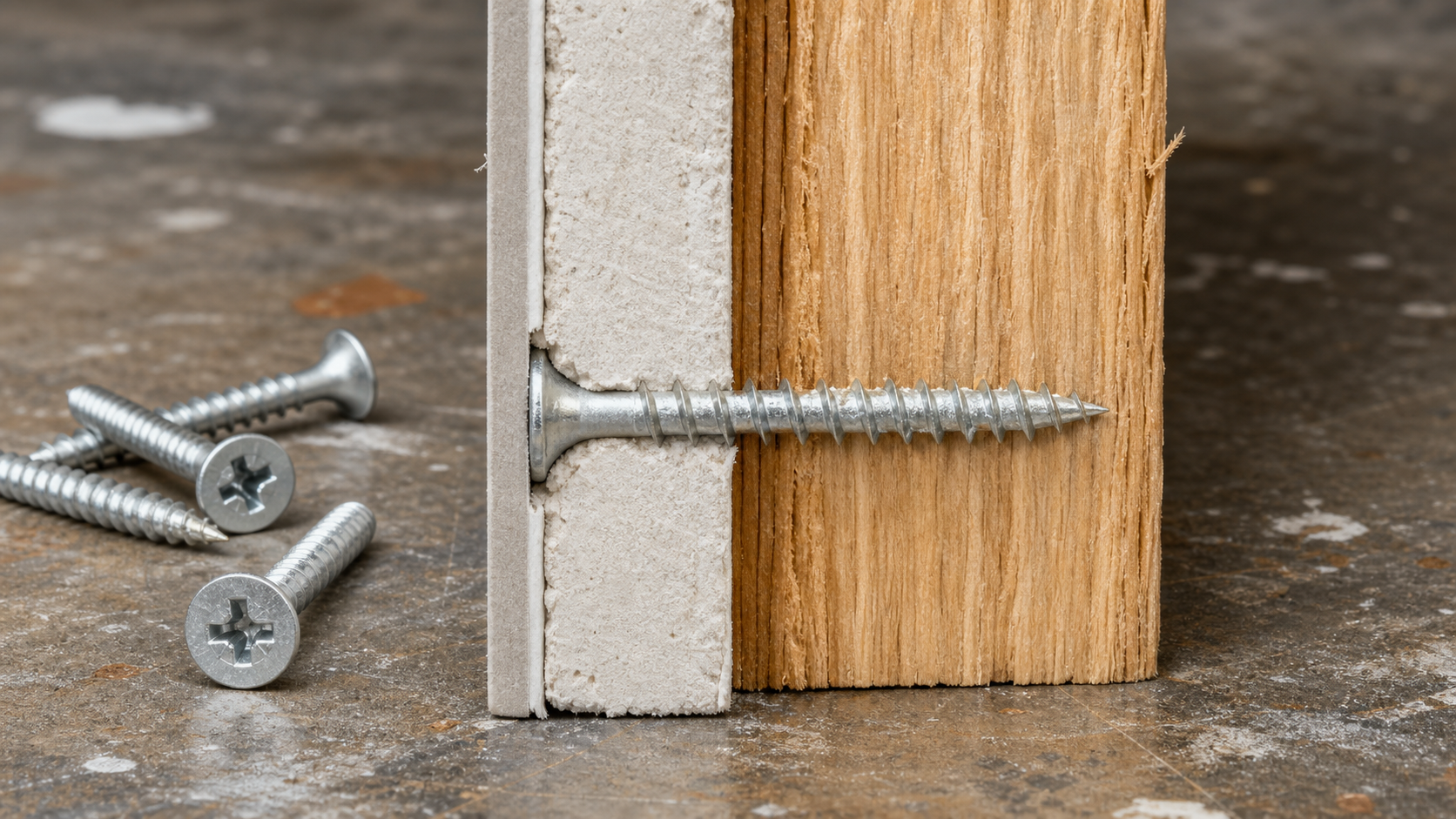
Drywall screws are engineered for a specific purpose: to attach gypsum board to wood or metal framing with reliable holding power and minimal surface damage. When they fail, the cause is almost always one of two things: the screw specification does not match the substrate or environmental conditions, or the installation technique introduces stress that the screw was not designed to handle. Common failure modes include spin-out (the screw strips the board without gripping the framing), pop-ups (the screw head breaks through the paper face), corrosion staining, and snap-off during driving. Each of these can be traced back to a specification or application error. By understanding the verified parameters of FactoryNail drywall screws, buyers can eliminate most of these problems before they occur.
2. Verified FactoryNail Drywall Screw Specifications
The following table lists all confirmed specifications for FactoryNail drywall screws. These are the only parameters that can be relied upon for procurement decisions. Any other claimed dimensions, ratings, or certifications are not supported by verified facts.
| Specification | FactoryNail Verified Options | Notes for Buyers |
|---|---|---|
| Material | Q195 / Q235 steel wire, or customized material | Custom material must be specified at quotation stage |
| Length | Customized according to customer requirements | No standard stock lengths published; submit required dimensions for quotation |
| Diameter | Customized according to customer requirements | No standard stock diameters published; submit required dimensions for quotation |
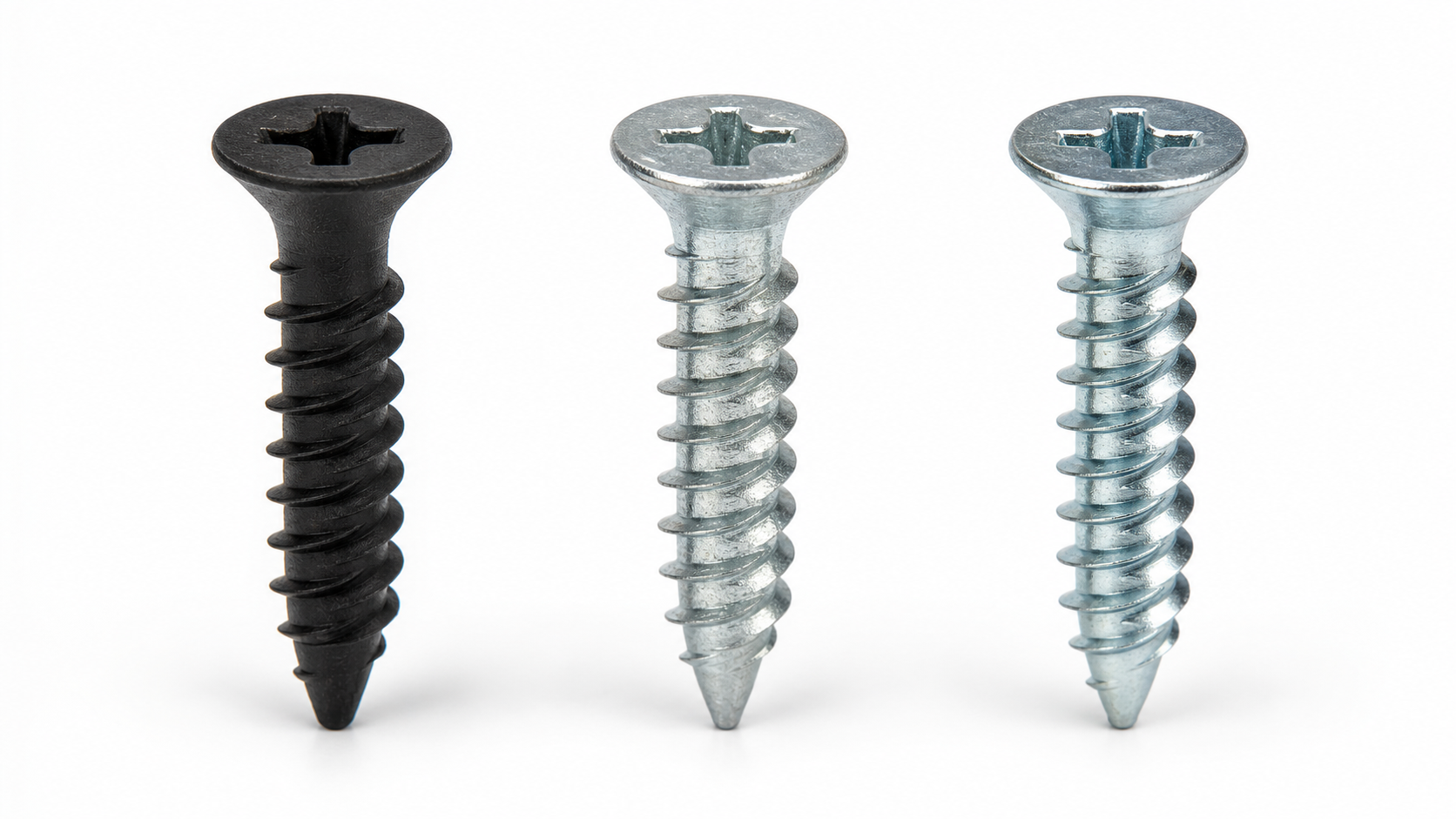
| Surface Treatment | Black phosphate / galvanized / customized | Black phosphate is matte black; galvanized is silver zinc; customized options available |
| Head | Bugle head | Standard bugle profile for countersinking |
| Drive | Phillips drive recess | Standard Phillips cross-recess |
| Thread | Deep sharp coarse thread | Designed for gypsum board and wood framing |
| Tip | Needle-point tip | For easy penetration without pre-drilling |
| Packing | Carton / bag / pallet / customized export packing | Custom packing available for bulk orders |
| Applications | Gypsum board, drywall installation, wood framing, interior construction | Not verified for metal framing, exterior use, or structural loads |
| Visual Finishes | Matte black phosphate, silver galvanized zinc, bright electro-zinc plated, natural stainless-steel appearance | Stainless-steel appearance is a visual finish, not a material unless separately verified |
Important: FactoryNail does not publish fixed stock dimensions, load ratings, certifications, laboratory test results, or code compliance. Any claims about these parameters should be verified directly with the manufacturer. Stainless-steel material is not confirmed unless separately verified in writing.
3. Specification Errors That Cause Drywall Screw Failures
Specification errors occur when the screw selected does not match the actual requirements of the job. Because FactoryNail offers customized length and diameter, buyers must provide exact dimensions. The following are the most common specification mistakes.
3.1 Incorrect Length for Substrate Thickness
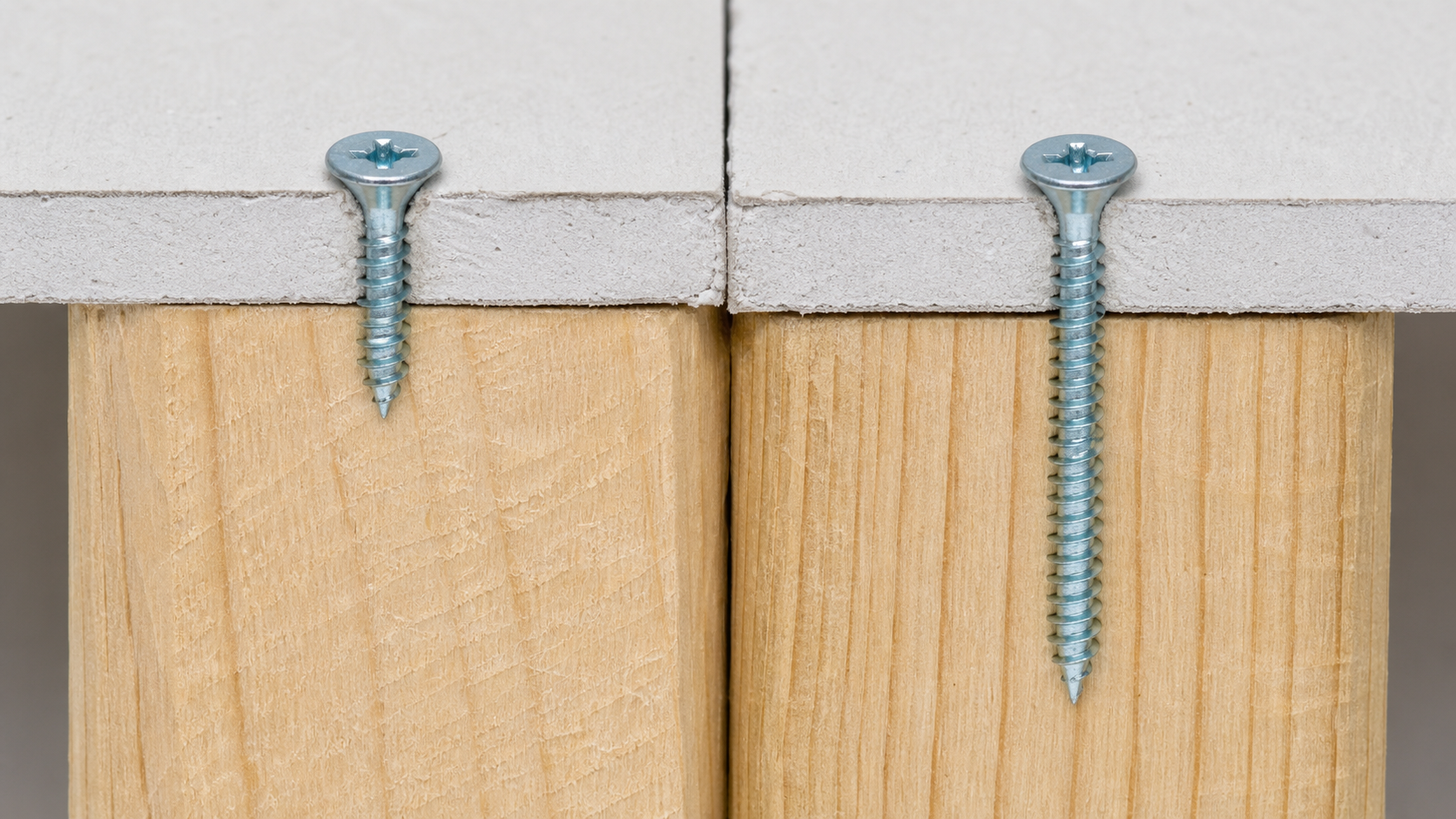
The most frequent specification error is choosing a screw that is too short or too long for the combined thickness of the gypsum board and the framing material. A screw that is too short will not achieve adequate thread engagement in the wood or metal stud, leading to pull-out or spin-out. A screw that is too long can protrude through the framing, cause dimpling, or even damage wiring or plumbing behind the wall. Because FactoryNail does not publish standard lengths, buyers must calculate the required length based on the board thickness plus a minimum of 5/8-inch penetration into the framing. For example, for 1/2-inch gypsum board on 2×4 wood studs, a screw length of 1-1/4 inches is typical, but this is a general buyer consideration, not a FactoryNail specification. Submit your exact board and framing dimensions for a quotation.
3.2 Wrong Surface Treatment for Environmental Conditions
Drywall screws are available in black phosphate, galvanized, and customized finishes. Black phosphate provides a matte black appearance and moderate corrosion resistance for interior dry environments. Galvanized screws offer a silver zinc coating with better corrosion resistance for areas with higher humidity, such as bathrooms or basements. Using black phosphate screws in a damp environment can lead to rust staining on the board surface, which is a common failure mode. FactoryNail also offers customized surface treatments for specific requirements. Buyers should specify the environmental conditions when ordering to ensure the correct finish is applied.
3.3 Material Mismatch for Substrate Type
FactoryNail drywall screws are made from Q195 or Q235 steel wire, or customized material. These are carbon steel grades suitable for wood framing and gypsum board. However, if the substrate is metal studs, a different screw type (self-tapping or self-drilling) is typically required. Using a coarse-thread drywall screw designed for wood in a metal stud will result in poor thread engagement and frequent spin-out. FactoryNail does not verify compatibility with metal framing. For metal stud applications, buyers should request a customized material or a different product line.
3.4 Drive Recess Compatibility Issues
All FactoryNail drywall screws feature a Phillips drive recess. While this is the industry standard, some power tools and bit types may not provide optimal torque transfer. Using a worn or incorrect bit size can cause cam-out, where the bit slips out of the recess, damaging the screw head and the board surface. This is a common installation error but can be prevented by ensuring the correct Phillips bit size (#2 is standard) and replacing bits regularly.
4. Installation Errors That Cause Drywall Screw Failures
Even with the correct specification, poor installation technique can cause failures. The following are the most common application errors.
4.1 Overdriving the Screw
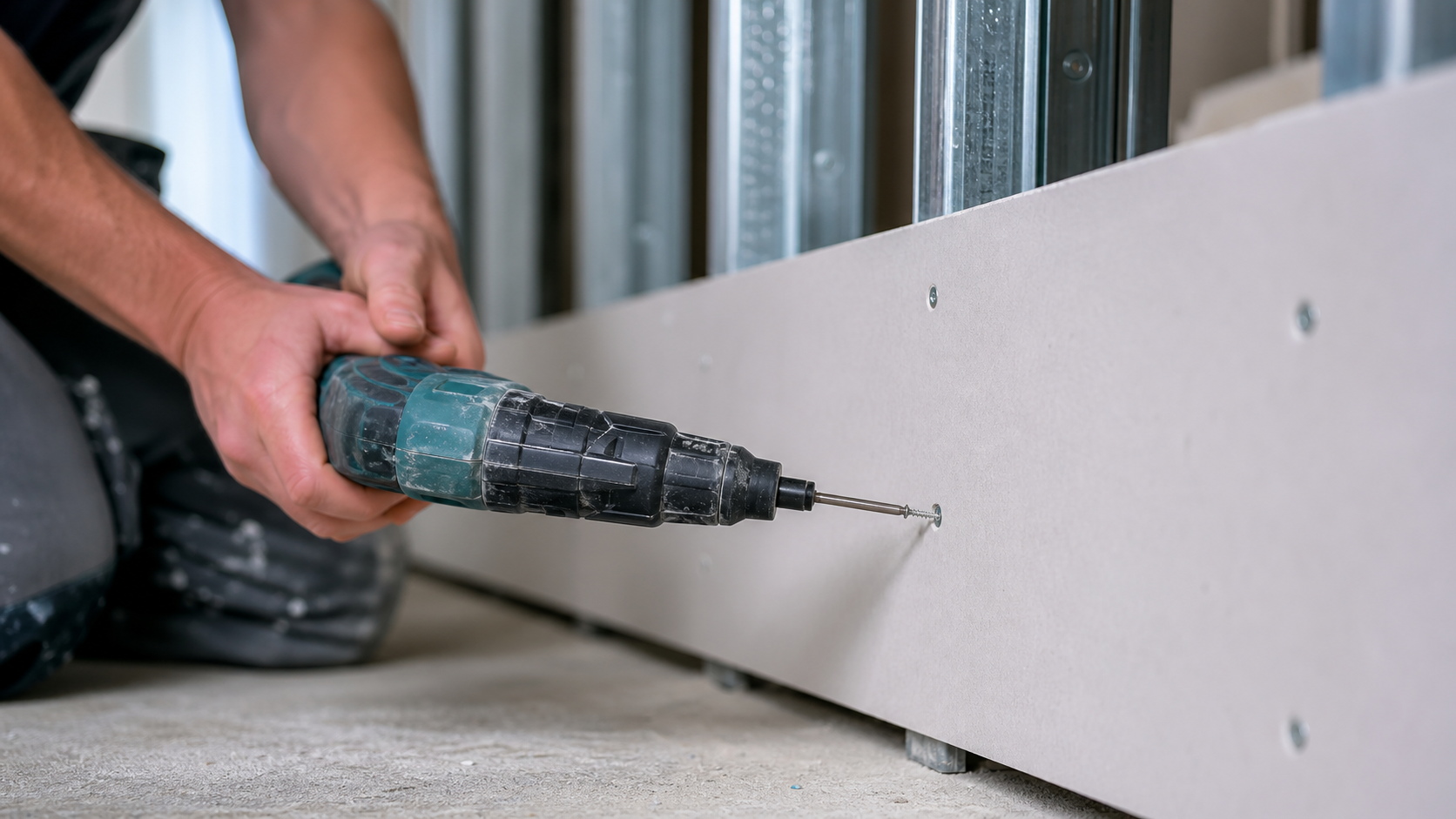
Overdriving occurs when the screw is driven too deep, breaking the paper face of the gypsum board. This creates a weak point that can cause the screw to pop out or the board to crack. The bugle head of FactoryNail screws is designed to countersink slightly below the board surface without tearing the paper. Proper technique requires setting the clutch or depth stop on the screw gun so that the screw stops when the head is just below the surface. Overdriving is a leading cause of callbacks in drywall finishing.
4.2 Underdriving the Screw
Underdriving leaves the screw head protruding above the board surface. This prevents proper joint compound coverage and creates a visible bump that must be sanded down. It also reduces holding strength because the full thread length is not engaged. Underdriving is often caused by a weak battery or incorrect tool setting. It is easily corrected by adjusting the depth stop.
4.3 Incorrect Screw Spacing
Drywall screws must be placed at specific intervals along the framing to ensure adequate support. Standard spacing for walls is 16 inches on center along the studs, and for ceilings, 12 inches on center. Placing screws too far apart can cause the board to sag or flex, leading to cracking at the seams. Placing them too close can weaken the board and create unnecessary holes. This is a general buyer consideration, not a FactoryNail specification, but it is critical for successful installation.
4.4 Driving at the Wrong Angle
Screws should be driven perpendicular to the board surface. Driving at an angle reduces thread engagement and can cause the screw to miss the framing entirely. It also creates a dimple that is difficult to finish. This error is common when working in tight spaces or when using a screw gun without a proper guide.
4.5 Using the Wrong Tool or Bit
Drywall screw guns with a depth-sensing nose are recommended for consistent results. Using a standard drill without a depth stop increases the risk of overdriving or underdriving. Additionally, using a worn Phillips bit can cause cam-out and damage the screw recess. For FactoryNail screws with a Phillips drive, a #2 Phillips bit is standard. Replace bits frequently to maintain good grip.
5. Selection Guidance for B2B Buyers
To avoid drywall screw installation problems, follow this selection process based on verified FactoryNail options and general buyer considerations.
Step 1: Determine Substrate and Environment
Identify the framing material (wood or metal) and the environmental conditions (dry interior, humid, or exterior). For wood framing and dry interior, Q195/Q235 steel with black phosphate is suitable. For humid areas, specify galvanized. For metal framing, request a customized material or a different product line.
Step 2: Calculate Required Length and Diameter
Measure the gypsum board thickness and the desired penetration into the framing. A general rule is 5/8-inch minimum penetration. Because FactoryNail offers customized length and diameter, submit these dimensions for quotation. Do not assume standard sizes.
Step 3: Specify Surface Treatment
Choose black phosphate for standard interior, galvanized for moisture-prone areas, or customized for special requirements. The visual finish references include matte black phosphate, silver galvanized zinc, bright electro-zinc plated, and natural stainless-steel appearance. Note that stainless-steel appearance is a finish, not a material.
Step 4: Order Packing and Quantity
FactoryNail packing options include carton, bag, pallet, or customized export packing. Specify the quantity and packing preference when requesting a quotation.
Step 5: Train Installation Crew
Ensure that all installers understand proper depth setting, screw spacing, and driving angle. Provide them with the correct bits and tools. This is a general buyer consideration but is essential for preventing failures.
6. Limitations of FactoryNail Drywall Screws
Buyers must be aware of the following limitations based on verified facts.
- No fixed stock dimensions: Length and diameter are customized. Buyers must submit requirements for quotation.
- No load ratings: FactoryNail does not publish pull-out or shear strength values. These should be determined by the buyer through testing or engineering analysis.
- No certifications: No third-party certifications (e.g., ASTM, ICC-ES) are verified. Buyers requiring certified products should request documentation from FactoryNail.
- No laboratory test results: Performance data such as corrosion resistance or drive torque are not provided.
- No code compliance: Compliance with building codes is not verified. Buyers must ensure the product meets local requirements.
- No stainless-steel material: The natural stainless-steel appearance is a visual finish, not a material. Stainless-steel material must be separately verified.
- Not verified for metal framing: The deep sharp coarse thread is designed for wood framing. Metal framing applications may require a different screw type.
7. Frequently Asked Questions
Q1: Why do my drywall screws keep spinning out without gripping the stud?
Spin-out is usually caused by using a screw that is too short for the combined board and framing thickness, or by using a coarse-thread screw in metal studs. For wood framing, ensure the screw length provides at least 5/8-inch penetration. For metal studs, request a customized material or a self-tapping screw from FactoryNail. Also check that the screw gun depth setting is correct and that the bit is not worn.
Q2: What causes rust stains on my drywall screws after installation?
Rust stains are caused by using black phosphate screws in a humid or wet environment. Black phosphate offers only moderate corrosion resistance. For bathrooms, basements, or exterior applications, specify galvanized screws. FactoryNail offers galvanized and customized surface treatments for better moisture protection.
Q3: How can I prevent the screw head from breaking through the paper face of the gypsum board?
This is called overdriving. Set the depth stop on your screw gun so that the bugle head stops just below the board surface without tearing the paper. Use a drywall screw gun with a depth-sensing nose. Practice on scrap board to calibrate the setting before starting the job.
Q4: Can I use FactoryNail drywall screws for metal studs?
FactoryNail drywall screws are designed with a deep sharp coarse thread for wood framing and gypsum board. They are not verified for metal stud applications. For metal framing, you may need a self-tapping or self-drilling screw with a different thread pattern. Contact FactoryNail to discuss customized material options for metal studs.
8. Get a Quotation for Custom Drywall Screws
Avoid drywall screw installation problems by specifying the right product for your project. FactoryNail offers customized drywall screws in Q195/Q235 steel or customized material, with black phosphate, galvanized, or customized surface treatments. Length and diameter are made to your requirements. Submit your board thickness, framing type, environmental conditions, and desired quantity for a quotation. Our team will provide pricing and lead time based on your exact specifications.
Request a quotation today: Contact FactoryNail with your project details and receive a customized quote for drywall screws that match your application.