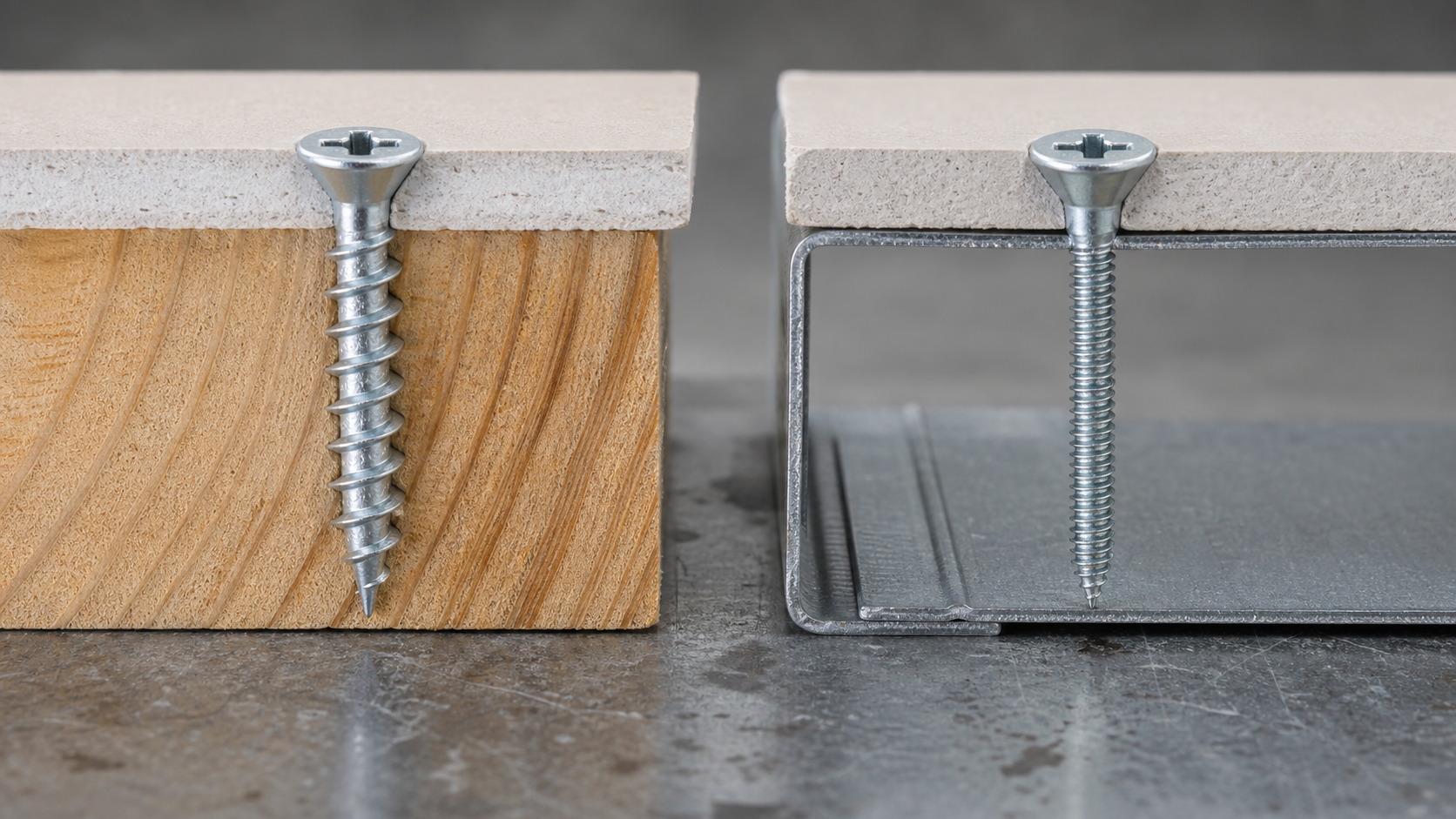
Coarse Thread vs Fine Thread Drywall Screws: When to Specify Each for Commercial Framing and Gypsum Board Attachment
Selecting the correct thread type for drywall screws is a fundamental procurement decision that directly affects pull-out strength, installation speed, and fastener performance in commercial construction. The question “When should a buyer specify coarse-thread or fine-thread drywall screws?” arises every time a contractor or distributor places an order for gypsum board attachment. This guide provides a clear, fact-based comparison between the two thread options, using only verified FactoryNail specifications and general industry knowledge. It distinguishes what FactoryNail can supply from broader buyer considerations, so you can make an informed specification without relying on unverified claims.
Understanding the Thread Difference: Coarse vs Fine
The primary distinction between coarse-thread and fine-thread drywall screws lies in the thread pitch—the distance between adjacent threads. Coarse-thread screws have fewer threads per inch (TPI) with deeper, more aggressive threads. Fine-thread screws have more threads per inch with shallower, closer-spaced threads. This geometric difference dictates how the screw engages with the substrate material.
FactoryNail Drywall Screws – Verified Specifications
| Specification | Detail |
|---|---|
| Product Name | Drywall Screws |
| Material | Q195 / Q235 steel wire or customized material |
| Length | Customized according to customer requirements |
| Diameter | Customized according to customer requirements |
| Surface Treatment | Black phosphate / galvanized / customized |
| Head | Bugle head |
| Drive | Phillips drive recess |
| Thread | Deep sharp coarse thread (standard); fine thread available on request |
| Tip | Needle-point tip |
| Packing | Carton / bag / pallet / customized export packing |
| Visual Finish References | Matte black phosphate, silver galvanized zinc, bright electro-zinc plated, natural stainless-steel appearance |
Note: FactoryNail does not publish fixed stock dimensions, load ratings, certifications, laboratory test results, or code compliance data. All length and diameter specifications are customized per customer requirements. When ordering, buyers must submit their required dimensions for quotation.
Coarse-Thread Drywall Screws: Best for Wood Framing
Coarse-thread drywall screws are the standard choice for attaching gypsum board to wood framing—studs, joists, or furring strips. The deep, sharp coarse thread is designed to bite aggressively into wood fibers, providing strong holding power and rapid installation.
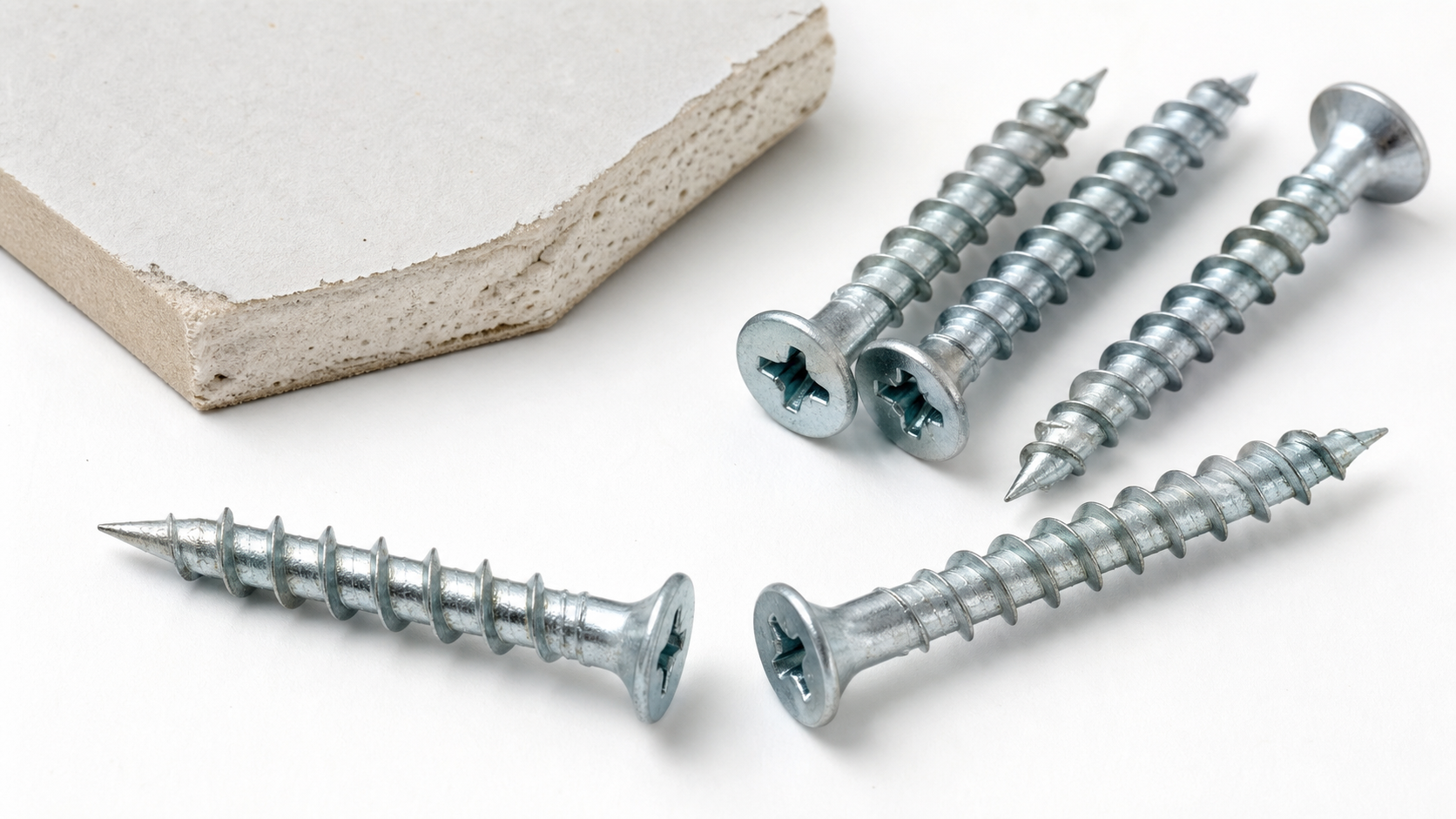
Why coarse thread works well in wood:
- Thread engagement: The deeper thread profile creates a larger surface area contact with the wood, increasing pull-out resistance.
- Installation speed: Coarse threads drive faster into wood because fewer turns are required per inch of penetration.
- Reduced splitting risk: The aggressive thread cuts through wood fibers rather than wedging them apart, which can help minimize splitting in softwood or engineered lumber.
General buyer considerations for coarse-thread screws in wood:
- Wood density matters: Softwoods (pine, fir, spruce) accept coarse threads easily; hardwoods (oak, maple) may require pre-drilling to prevent splitting.
- Screw length should be sufficient to penetrate the wood framing by at least 5/8 inch (16 mm) for adequate holding power—though this is a general guideline, not a FactoryNail specification.
- Coarse-thread screws are not recommended for metal studs because the thread pitch is too wide to engage thin-gauge steel effectively.
FactoryNail supplies coarse-thread drywall screws as the standard thread option. The thread is described as “deep sharp coarse thread” with a needle-point tip. Buyers can specify any length and diameter, and FactoryNail will produce accordingly. No fixed stock sizes are published; submit your required dimensions for a quotation.
Fine-Thread Drywall Screws: Best for Metal Studs and Steel Framing
Fine-thread drywall screws are specifically engineered for attachment to metal studs and steel framing. The higher thread count per inch allows the screw to grip thin-gauge steel (typically 20 to 25 gauge) without stripping or slipping.
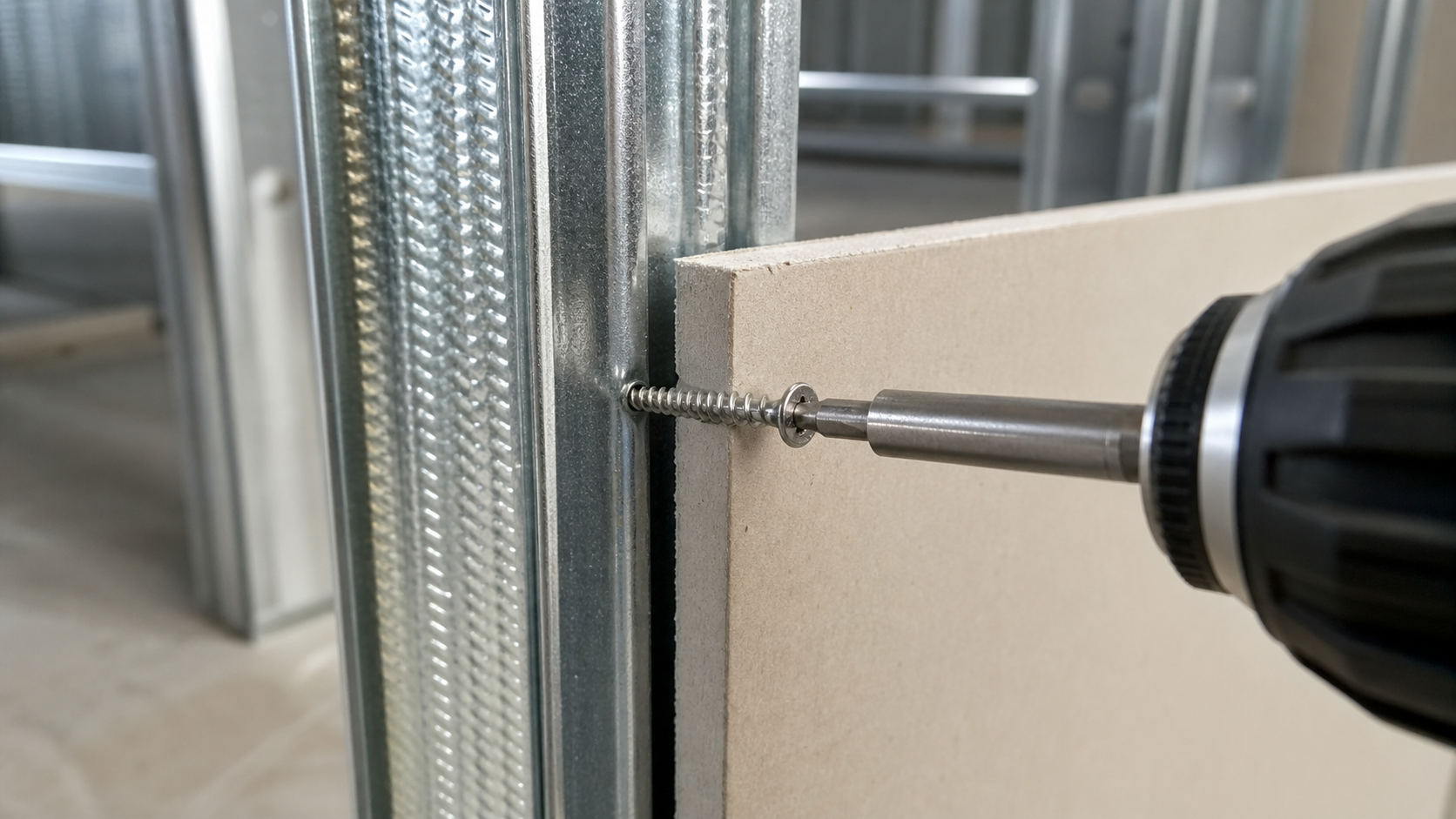
Why fine thread works well in metal:
- Thread engagement in thin steel: The closely spaced threads distribute the load over a greater number of contact points, reducing the risk of pull-out from thin metal.
- Self-tapping capability: Fine-thread screws often have a sharper, more pointed tip that can pierce steel without pre-drilling, though this depends on the specific screw design.
- Reduced cam-out: The finer thread requires more torque to drive, which can actually improve control and reduce the chance of the driver bit slipping out of the Phillips recess.
General buyer considerations for fine-thread screws in metal:
- Metal gauge compatibility: Fine-thread screws are typically used with steel studs up to 20 gauge. Heavier gauge steel (18 gauge or thicker) may require a self-drilling screw with a drill point tip, not a standard drywall screw.
- Screw length should be selected so that the threaded portion fully engages the metal stud—typically 1/2 inch (12.7 mm) penetration is a general guideline, but this is not a FactoryNail specification.
- Fine-thread screws are not recommended for wood because the shallow threads do not grip wood fibers effectively, leading to poor holding power and potential stripping.
FactoryNail can supply fine-thread drywall screws upon request. The standard thread is deep sharp coarse thread, but fine thread is available as a customization. Buyers must specify “fine thread” when ordering and provide the required length and diameter for quotation. No fixed fine-thread dimensions are published.
Selection Guidance: How to Choose Between Coarse and Fine Thread
The decision between coarse-thread and fine-thread drywall screws hinges primarily on the substrate material. Use the following criteria to guide your specification:
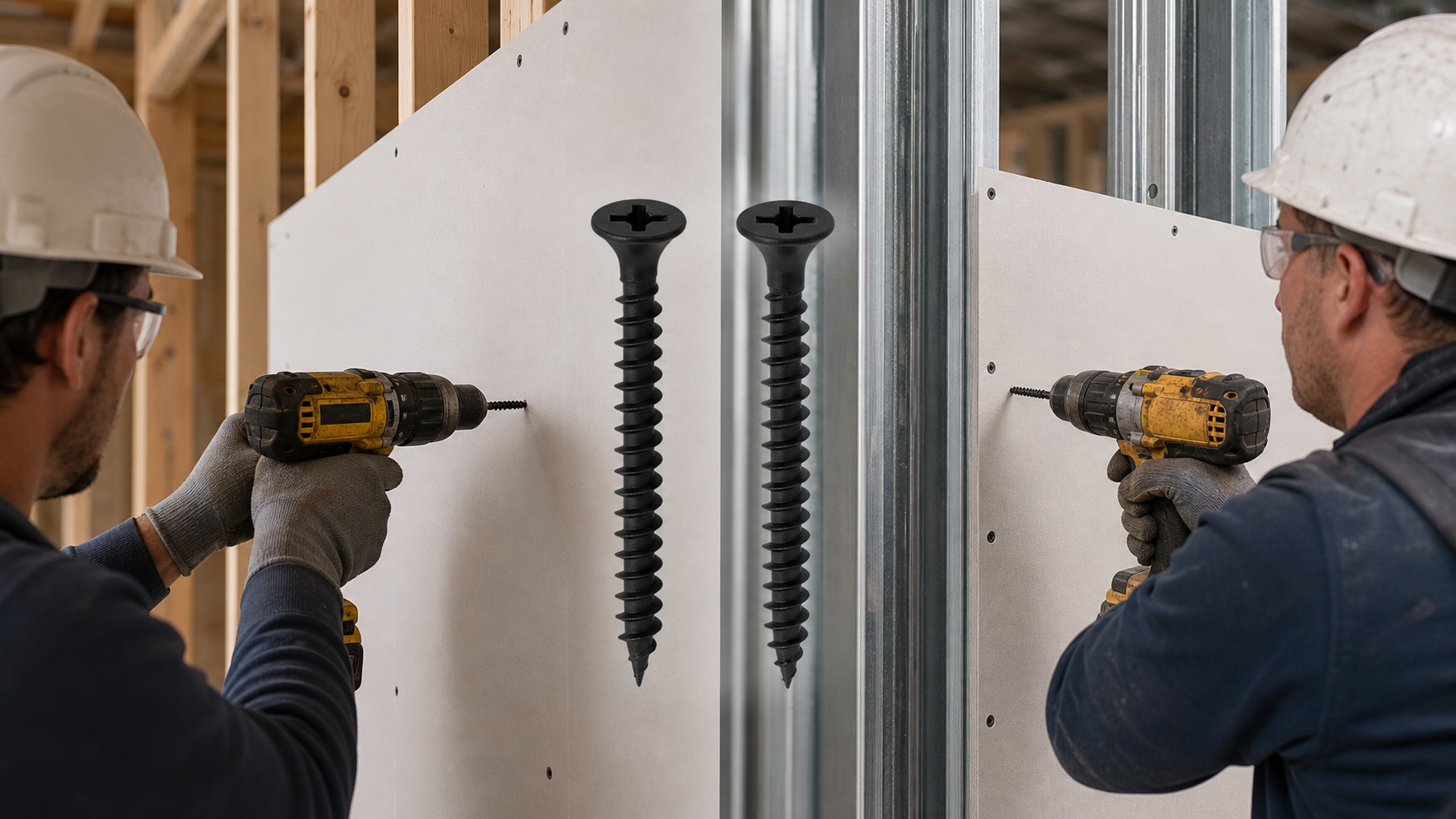
- Identify the framing material: Wood studs, joists, or furring strips → coarse thread. Metal studs or steel framing → fine thread.
- Consider the gypsum board thickness: Standard 1/2-inch (12.7 mm) or 5/8-inch (15.9 mm) drywall can be attached with either thread type, but the screw length must be customized to ensure adequate penetration into the framing. FactoryNail does not publish recommended lengths; submit your board thickness and framing type for a quotation.
- Evaluate environmental conditions: If the installation is in a humid or corrosive environment, consider the surface treatment. FactoryNail offers black phosphate, galvanized, or customized finishes. Black phosphate provides some corrosion resistance for interior use; galvanized or zinc-plated finishes offer enhanced protection for damp areas. Stainless-steel appearance is available as a visual finish reference, but stainless-steel material is not a verified FactoryNail option unless separately confirmed.
- Determine volume and packaging: FactoryNail packs screws in cartons, bags, pallets, or customized export packing. Specify your preferred packaging when requesting a quotation.
- Request a sample or specification sheet: Since FactoryNail does not publish test results or certifications, request a physical sample or a detailed specification sheet for your specific order to verify thread geometry, hardness, and finish.
Important limitation: FactoryNail does not provide load ratings, pull-out test data, or code compliance documentation. The selection guidance above is based on general industry practice, not on FactoryNail-specific testing. Buyers should conduct their own field trials or consult with a structural engineer for critical applications.
Limitations and Important Considerations for B2B Buyers
When specifying coarse-thread or fine-thread drywall screws from FactoryNail, keep the following limitations in mind:
- No fixed stock dimensions: FactoryNail does not maintain a standard inventory of pre-sized screws. All lengths and diameters are produced to customer specifications. You must provide your exact requirements for a quotation.
- No certifications or test data: FactoryNail does not supply certifications, laboratory test results, or code compliance documentation. If your project requires ICC-ES reports, ASTM testing, or similar, verify with FactoryNail before ordering.
- Material customization: The standard material is Q195 or Q235 steel wire. Customized material is available, but stainless steel is not a verified standard option unless separately confirmed. Do not assume stainless-steel availability without explicit confirmation.
- Thread customization: The standard thread is deep sharp coarse thread. Fine thread is available on request. There is no published TPI (threads per inch) for either option; request this detail when ordering.
- Surface treatment: Black phosphate, galvanized, and customized finishes are available. The visual finish references (matte black, silver galvanized, bright electro-zinc, natural stainless-steel appearance) are for appearance only and do not imply specific corrosion resistance ratings.
- Application scope: FactoryNail drywall screws are intended for gypsum board attachment to wood framing or metal studs in interior construction. They are not designed for exterior use, structural connections, or load-bearing applications unless explicitly confirmed by FactoryNail.
Frequently Asked Questions (FAQs)
1. Can I use coarse-thread drywall screws in metal studs?
Generally, no. Coarse-thread screws are designed for wood framing. The wide thread pitch does not engage thin-gauge steel effectively, leading to poor holding power and potential pull-out. For metal studs, specify fine-thread drywall screws. FactoryNail can supply fine-thread screws upon request.
2. What length and diameter should I specify for my drywall screws?
FactoryNail does not publish recommended lengths or diameters because all dimensions are customized per customer requirements. As a general guideline, the screw should penetrate the framing by at least 5/8 inch (16 mm) for wood or 1/2 inch (12.7 mm) for metal, but this is not a FactoryNail specification. Submit your board thickness and framing type to FactoryNail for a quotation.
3. Does FactoryNail provide test reports or certifications for their drywall screws?
No. FactoryNail does not supply load ratings, pull-out test results, certifications, or code compliance documentation. Buyers should request a sample for field testing or consult with a structural engineer for critical applications. If your project requires specific certifications, verify availability with FactoryNail before ordering.
4. What surface treatment should I choose for humid environments?
For interior drywall installation in standard conditions, black phosphate is common. For areas with higher humidity (e.g., bathrooms, basements), galvanized or zinc-plated finishes offer enhanced corrosion resistance. FactoryNail offers black phosphate, galvanized, and customized finishes. The visual finish references (matte black, silver galvanized, bright electro-zinc, natural stainless-steel appearance) are for appearance only. Confirm the corrosion resistance level with FactoryNail for your specific environment.
Request a Quotation for Custom Drywall Screws
Ready to specify coarse-thread or fine-thread drywall screws for your next project? FactoryNail produces custom-length, custom-diameter drywall screws with bugle head, Phillips drive, and needle-point tip. Submit your required dimensions, thread type (coarse or fine), surface treatment, and packaging preferences for a quotation.
Contact FactoryNail today to discuss your requirements and receive a competitive B2B quote.