Substrate-Specific Drywall Screw Selection: A Technical Guide for Commercial Contractors
Selecting the correct drywall screw for each substrate is a fundamental skill for commercial contractors. The wrong fastener can lead to popped heads, stripped threads, failed attachments, and costly rework. This guide explains how to choose drywall screws based on substrate type, project conditions, and fastener specifications, helping you achieve reliable, code-compliant installations every time.
Understanding Drywall Screw Anatomy
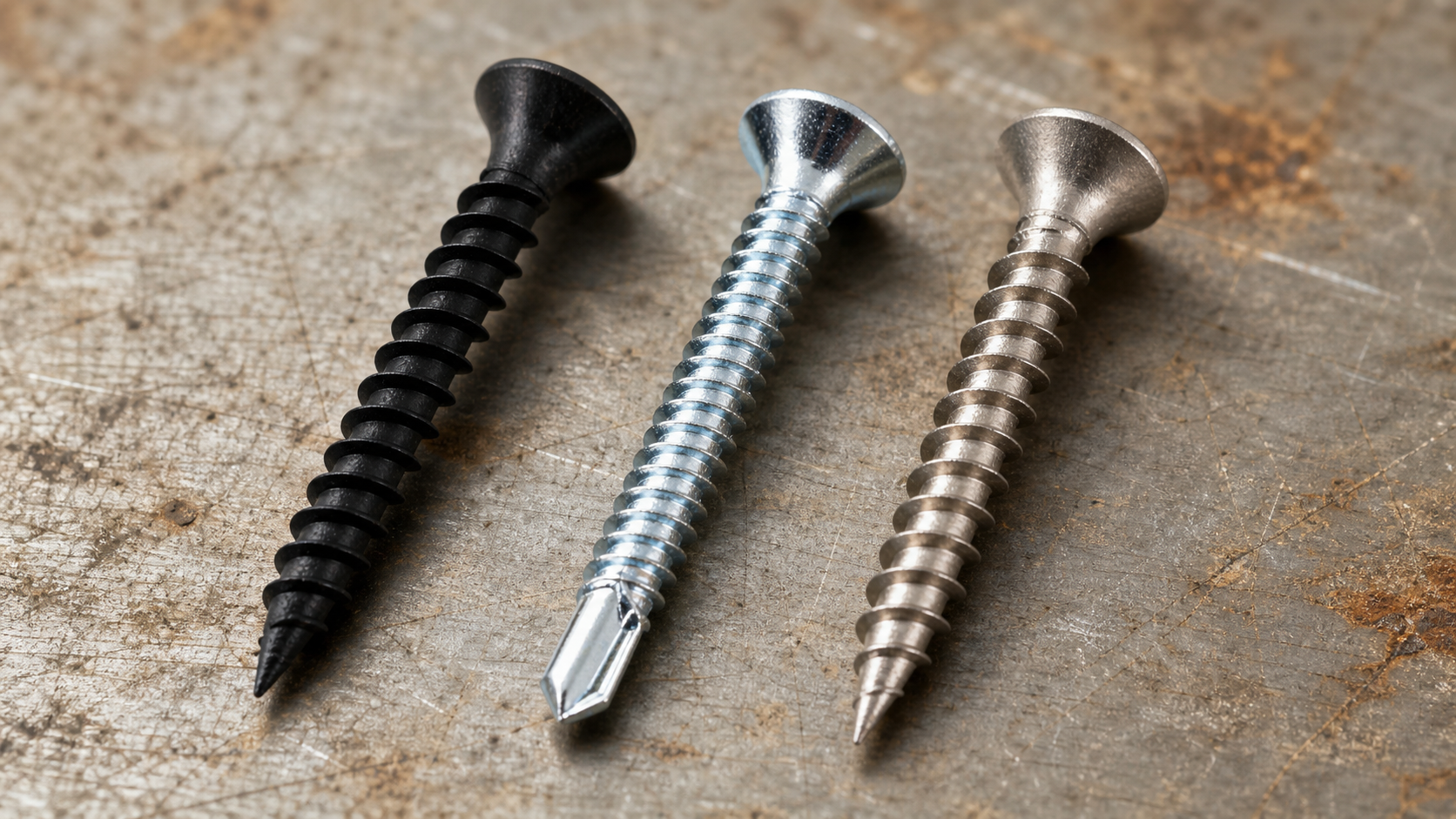
Before matching screws to substrates, it helps to understand the key components of a drywall screw. Standard drywall screws are made from Q195 or Q235 steel wire, though custom materials are available for specialized applications. The screw features a bugle head that countersinks smoothly into gypsum board without tearing the paper facing. A Phillips drive recess provides consistent torque transfer during installation.
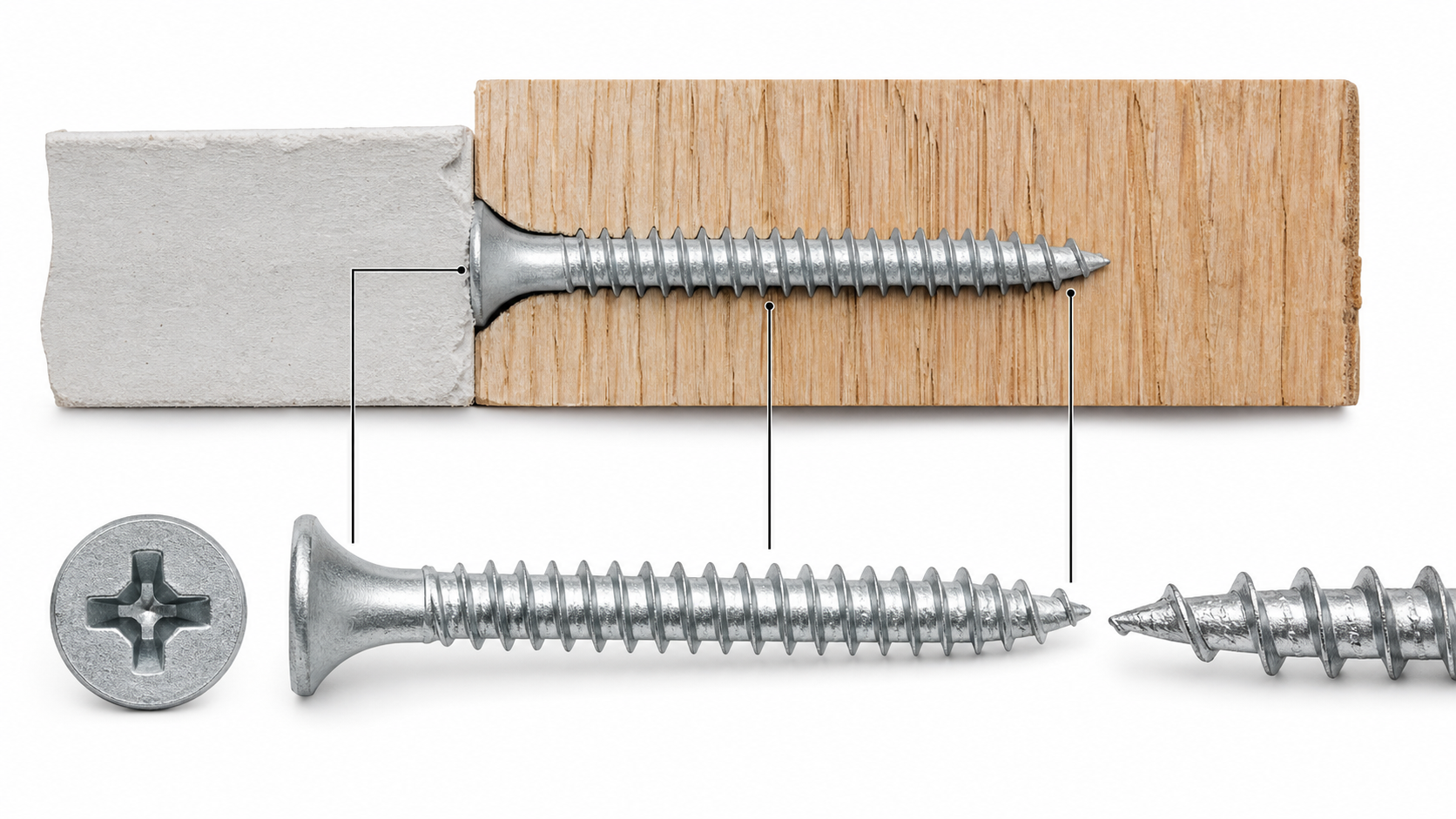
The thread design is critical: deep, sharp coarse threads provide strong holding power in wood framing, while fine threads are better suited for metal studs. The needle-point tip allows for quick, accurate starting without pre-drilling in most materials. Surface treatments include black phosphate, galvanized coating, or custom finishes that affect corrosion resistance and visual appearance.
How to Choose Drywall Screws by Substrate Type
Wood Framing
For wood studs and joists, use coarse-thread drywall screws with a needle-point tip. The deep threads bite aggressively into softwoods like pine and fir, providing strong holding power. Recommended length is typically 1-1/4 inches for single-layer 1/2-inch drywall, but longer screws (1-5/8 to 2 inches) are needed for double-layer applications or thicker boards.
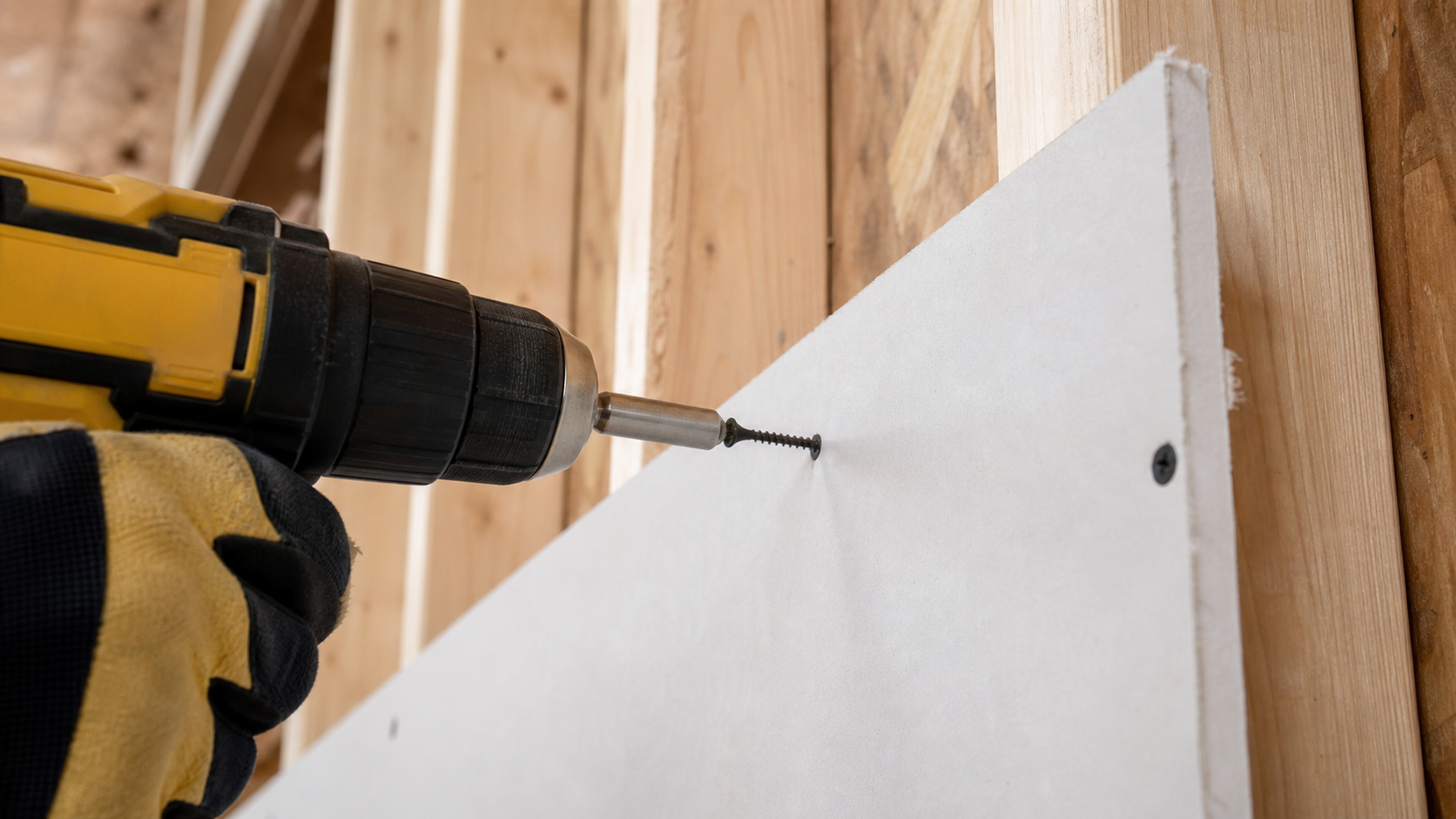
Black phosphate coating is standard for interior wood framing where moisture exposure is minimal. For areas with occasional humidity (like bathrooms or basements), consider galvanized screws for added corrosion resistance. Always verify that screw length provides at least 5/8-inch penetration into the wood stud.
Metal Framing (Steel Studs)
Metal studs require fine-thread drywall screws designed specifically for steel. These screws have sharper, more closely spaced threads that cut into the metal rather than relying on wood-grip friction. Use self-drilling tips (often called drill-point or self-tapping) for faster installation without pre-drilling.
Screw length for metal framing follows the same rule: at least 5/8-inch penetration beyond the drywall thickness. For 25-gauge steel studs, standard fine-thread screws work well. For heavier 20-gauge or 18-gauge steel, use screws with a harder case-hardened tip to prevent breakage during installation.
Concrete and Masonry
Attaching drywall directly to concrete or masonry walls requires specialized fasteners. Standard drywall screws are not designed for this substrate. Instead, use concrete screws (like Tapcon) or masonry anchors with a separate drywall screw. For furring strips attached to concrete, use standard coarse-thread screws into the wood, then secure the furring to concrete with appropriate masonry fasteners.
When installing drywall over rigid foam insulation on concrete walls, use longer screws (2-1/2 to 3 inches) that penetrate through the insulation and at least 1 inch into the concrete. Always follow the fastener manufacturer’s specifications for pull-out values and spacing.
Screw Length and Diameter Selection
Drywall screw length and diameter are customized according to customer requirements, but general guidelines apply. For standard 1/2-inch drywall on wood framing, use 1-1/4-inch screws. For 5/8-inch drywall, use 1-5/8-inch screws. Double-layer applications require screws long enough to penetrate both layers plus the substrate.
Diameter typically ranges from #6 to #8 for most residential and commercial applications. #6 screws are common for light-duty work, while #8 screws provide greater holding power for heavy board or high-traffic areas. Thicker drywall (5/8-inch type X fire-rated board) often benefits from #8 screws to prevent strip-out during installation.
Always verify that screw length provides adequate penetration into the substrate. Industry standards recommend at least 5/8-inch penetration into wood framing and at least 3/8-inch into metal studs. For fire-rated assemblies, follow the specific assembly listing requirements, which may mandate longer screws or specific spacing.
Surface Treatment and Corrosion Resistance
The surface treatment affects both corrosion resistance and visual appearance. Common options include:
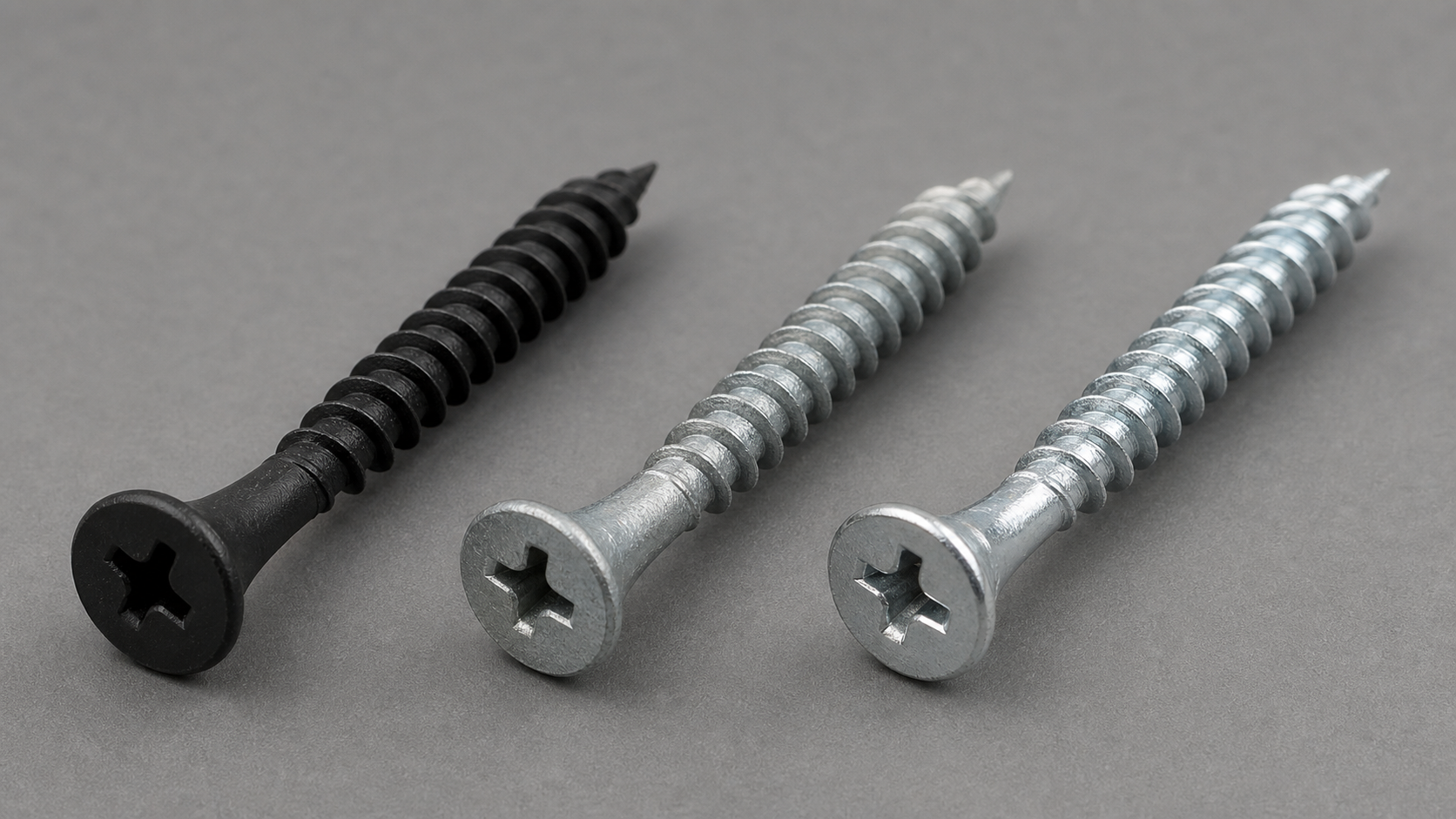
- Black phosphate: Matte black finish, standard for interior drywall, provides moderate corrosion resistance for dry environments.
- Galvanized (silver zinc): Silver galvanized zinc coating offers better corrosion resistance for humid areas like bathrooms and basements.
- Bright electro-zinc plated: Shiny silver finish, often used where appearance matters or additional corrosion protection is needed.
- Stainless steel: Natural silver appearance, highest corrosion resistance for exterior or marine environments (verify separately as stainless steel is not standard).
For most commercial interior work, black phosphate screws are sufficient. For areas exposed to moisture, galvanized or electro-zinc plated screws are recommended. Exterior applications require stainless steel or specially coated fasteners designed for weather exposure.
Comparison Table: Drywall Screw Selection by Substrate
| Substrate | Thread Type | Tip Style | Recommended Coating | Minimum Penetration | Common Length (1/2″ drywall) |
|---|---|---|---|---|---|
| Wood framing (studs, joists) | Coarse thread | Needle-point | Black phosphate or galvanized | 5/8 inch | 1-1/4 inch |
| Metal framing (steel studs) | Fine thread | Self-drilling (drill-point) | Black phosphate or galvanized | 3/8 inch | 1-1/4 inch |
| Concrete/masonry (with furring) | Coarse thread (into furring) | Needle-point | Galvanized or epoxy-coated | 5/8 inch into furring | 1-5/8 inch (plus furring thickness) |
| Double-layer drywall | Coarse or fine (match substrate) | Needle-point or self-drilling | Match substrate requirement | 5/8 inch into substrate | 2 inch or longer |
| Fire-rated assemblies | Per assembly listing | Per assembly listing | Per assembly listing | Per assembly listing | Per assembly listing |
Contractor Selection Guidance
When selecting drywall screws for a commercial project, follow these steps:
- Identify the substrate: Determine whether you’re fastening to wood, metal, concrete, or another material. This is the most important factor in screw selection.
- Check project specifications: Review architectural drawings and specifications for any required screw types, lengths, or spacing. Fire-rated assemblies often have specific requirements.
- Consider environmental conditions: Assess moisture exposure, temperature extremes, and potential for corrosion. Choose coating accordingly.
- Verify screw dimensions: Confirm length, diameter, and thread type match substrate and drywall thickness. Remember that dimensions are customized per customer requirements.
- Test on-site: Before full installation, test the screw in the actual substrate to ensure proper seating, no strip-out, and adequate holding power.
- Source from reputable suppliers: Work with manufacturers who can provide consistent quality and customization options. Request samples for large projects.
Limitations and Considerations
While this guide provides general selection criteria, several limitations apply. Drywall screw performance depends on proper installation technique, including correct driver speed, consistent depth, and appropriate spacing. Over-driving can strip threads or break screws, while under-driving leaves screw heads protruding.
Load ratings, certifications, and laboratory test results are not provided here because they vary by manufacturer and specific product. Always consult the fastener manufacturer’s published data for load capacities and code compliance information. Stainless steel material is not standard for drywall screws unless separately verified with the supplier.
For unusual substrates or demanding applications (high seismic zones, exterior installations, or specialized fire-rated assemblies), consult a structural engineer or the fastener manufacturer directly. Generic guidance cannot replace project-specific engineering review.
Frequently Asked Questions
What is the difference between coarse-thread and fine-thread drywall screws?
Coarse-thread screws have deeper, wider-spaced threads designed for wood framing. Fine-thread screws have shallower, closer-spaced threads that cut into metal studs. Using the wrong thread type can result in poor holding power or stripped threads.
How long should drywall screws be for 1/2-inch drywall?
For 1/2-inch drywall on wood framing, use 1-1/4-inch screws. For metal framing, 1-1/4-inch screws are also standard, but ensure at least 3/8-inch penetration into the metal stud. Always verify with project specifications.
Can I use drywall screws for exterior applications?
Standard drywall screws are not designed for exterior use. For exterior applications, use stainless steel or specially coated fasteners rated for weather exposure. Verify with the manufacturer for specific recommendations.
What coating is best for bathroom drywall installation?
For bathrooms and other humid areas, galvanized or electro-zinc plated screws provide better corrosion resistance than standard black phosphate. In very damp environments, consider stainless steel screws.
Do I need different screws for fire-rated drywall?
Fire-rated assemblies often have specific screw requirements listed in the assembly listing. These may specify screw type, length, spacing, and coating. Always follow the assembly listing exactly to maintain the fire rating.
How do I prevent drywall screws from popping?
Proper screw selection and installation prevent popping. Use the correct screw length and thread type for the substrate. Drive screws to the correct depth (slightly below the paper surface without breaking it). Avoid over-driving, which can strip threads and reduce holding power.
Conclusion
Knowing how to choose drywall screws for different substrates is essential for commercial contractors who want reliable, long-lasting installations. By matching thread type, length, coating, and tip style to the specific substrate and environmental conditions, you can avoid common failures and ensure code compliance. Always verify project specifications, test on-site, and source from reputable manufacturers who can provide customized solutions for your needs.
For large commercial projects, work with a fastener supplier who understands substrate-specific requirements and can provide consistent quality across thousands of screws. Request samples, review manufacturer data, and never compromise on fastener quality—the screws are the foundation of your drywall installation.
Ready to order substrate-specific drywall screws for your next project? Contact us for a quote with customized lengths, diameters, and coatings to match your exact specifications.